Fire-resistant plants for Colorado
Quick answer
Top-ranked fire-resistant picks for the zones nearest the house: groundcovers, Fire Spinner ice plant and Hens and chicks; perennials, Harebells and Poppy Mallow. Picks come from CSU Extension's ignition-resistant list and Plant Select's. No plant is fireproof: CSU says plant choice, spacing and maintenance all count.
Top picks by type
Jump to
Every pick scores 8 or higher on CSU Extension's 2025 ignition-resistant list, CSU's bar for the first 30 feet (or, with no CSU score, is on Plant Select's fire-resistant list), and is hardy to zone 5, which covers most of the Front Range (in the coldest zone 4 spots, check the plant page), fine in alkaline soil, and free of invasive, spreading and fails-here flags; picks then rank by CSU's ignitability score (10 is least ignitable) plus a point each for Colorado native, low water, in stock at a retailer we track, and Plant Select, with ties going alphabetically.
Top 8 groundcovers
- 1Fire Spinner ice plantTricolor blooms (orange-pink-purple), looks like a sunset. CSU ignitability score 10 of 10.
- 2Hens and chicksSucculent rosettes; produces 'chicks' that detach and root. CSU ignitability score 10 of 10.
- 3Mat penstemonNative mat-forming penstemon with intense blue-purple blooms. CSU ignitability score 8 of 10.
- 4Russian stonecropMore restrained than S. spurium; star-shaped yellow blooms age to orange. CSU ignitability score 10 of 10.
- 5STARBURST™ ice plantPink daisies with white centers, late spring through summer; succulent foliage. CSU ignitability score 10 of 10.
- 6Turquoise Tails blue sedumDistinctive blue-green needle-like foliage; arching habit; pale yellow flowers in summer. CSU ignitability score 10 of 10.
- 7Silverheels horehoundSilver-white round leaves form a velvet mat; pollinator-friendly white flower whorls. CSU ignitability score 8 of 10.
- 8Small-leaf pussytoesNative silvery mat with fuzzy white flowers. CSU ignitability score 8 of 10.
Top 8 perennials
- 1HarebellsBlue and purple flowers in summer into fall, low water, 12 in tall. CSU ignitability score 9.5 of 10.
- 2Poppy MallowWhite and pink flowers in summer, low water, 6 in tall. CSU ignitability score 8 of 10.
- 3western spring beautyWhite flowers in spring, 6 to 18 in tall. CSU ignitability score 9.5 of 10.
- 4Beardlip penstemonNative penstemon with vivid red tubular flowers, hummingbird magnet. CSU ignitability score 8 of 10.
- 5BlanketflowerYellow and red flowers in summer into fall, low water, 12 in tall. CSU ignitability score 8 of 10.
- 6Blue FlaxBlue flowers in spring into summer, low water, 18 in tall. CSU ignitability score 8 of 10.
- 7Blue Mist PenstemonBlue and purple flowers in spring into summer, low water, 12 in tall. CSU ignitability score 8 of 10.
- 8dayliliesYellow and red flowers in summer, low to medium water, 12 to 36 in tall. CSU ignitability score 10 of 10.
No plant is fireproof
CSU Extension rates plants on a 0 to 10 ignitability scale, where 10 is the least ignitable, recommends only plants scoring 8, 9 or 10 for the first 30 feet around a building, and says no plant is fireproof. Plant choice, spacing and maintenance all count. Where a plant goes matters too, and CSU/CSFS Fact Sheet 6.303 splits the yard into three zones from the edge of the house, eaves and decks included:
- Zone 1, 0-5 ft. Ideally non-combustible: pavers, gravel, bare ground.
- Zone 2, 5-30 ft. Small, irregular clusters of green, ignition-resistant plants with breaks between them. Plants that only Plant Select lists, with no CSU score, are shown for this zone only.
- Zone 3, 30-100 ft. Thin and space what is there. The fire ratings on this page do not cover this zone.
For the full zone-by-zone picture, see our defensible space guide.
All 53 plants
 Beardlip penstemonPenstemon barbatus24 to 48 inlow waterColorado nativeUSDA 3 to 8
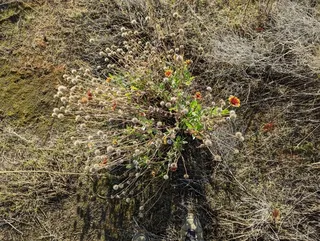 BlanketflowerGaillardia aristata12 inlow waterColorado nativeUSDA 3 to 10
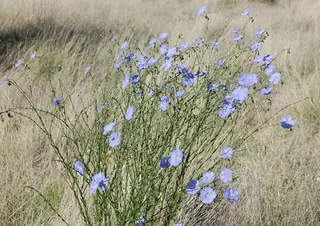 Blue FlaxLinum lewisii18 inlow waterColorado nativeUSDA 4 to 9
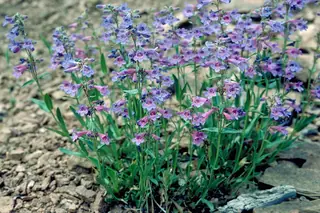 Blue Mist PenstemonPenstemon virens12 inlow waterColorado nativeUSDA 3 to 8
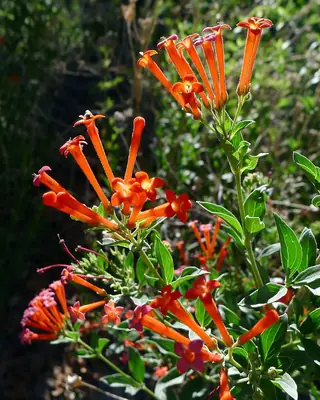 Firecracker PenstemonPenstemon eatonii18 to 36 inlow waterColorado nativeUSDA 3 to 8
 Golden ColumbineAquilegia chrysantha24 to 36 inmedium waterColorado nativeUSDA 3 to 8
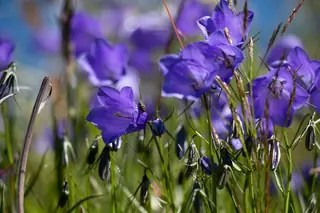 HarebellsCampanula rotundifolia12 inlow waterColorado nativeUSDA 3 to 8
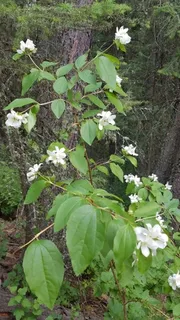 Lewis's mock orangePhiladelphus lewisii6 to 10 ftmedium waterColorado nativeUSDA 4 to 8
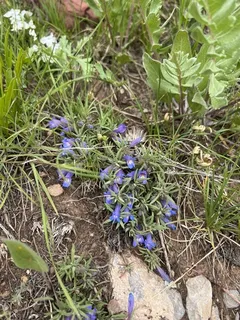 Mat penstemonPenstemon caespitosus2 to 4 inlow waterColorado nativeUSDA 3 to 8
 northern bedstrawGalium boreale12 inmedium to high waterColorado nativeUSDA 4 to 8
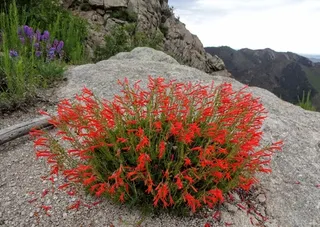 Pineleaf PenstemonPenstemon pinifolius12 to 18 inlow waterColorado nativeUSDA 3 to 8
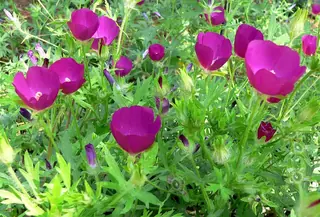 Poppy MallowCallirhoe involucrata6 inlow waterColorado nativeUSDA 4 to 8
 prairie smokeGeum triflorum18 inmedium to high waterColorado nativeUSDA 3 to 8
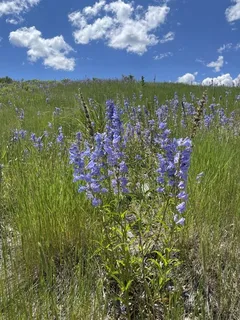 Rocky Mountain PenstemonPenstemon strictus30 inlow to medium waterColorado nativeUSDA 3 to 8
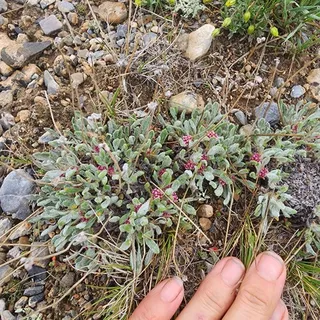 rosy pussytoesAntennaria rosea6 inlow to medium waterColorado nativeUSDA 3 to 8
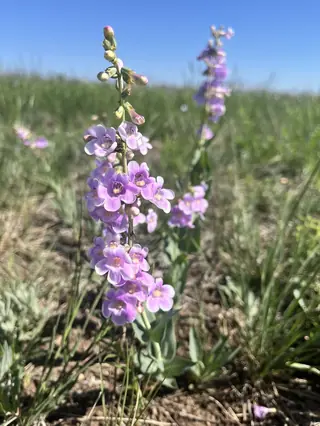 Side-bells PenstemonPenstemon secundiflorus20 inlow to medium waterColorado nativeUSDA 3 to 8
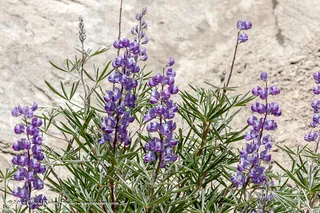 silvery lupineLupinus argenteus12 to 36 inlow to medium waterColorado nativeUSDA 4 to 8
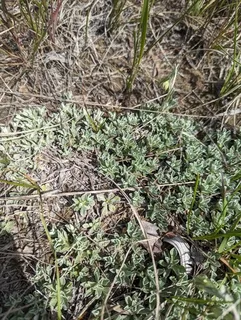 Small-leaf pussytoesAntennaria parvifolia2 to 5 inlow waterColorado nativeUSDA 3 to 8
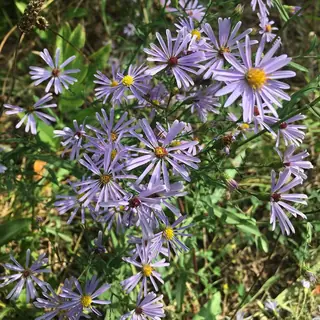 Smooth AsterSymphyotrichum laeve24 to 36 inlow to medium waterColorado nativeUSDA 3 to 8
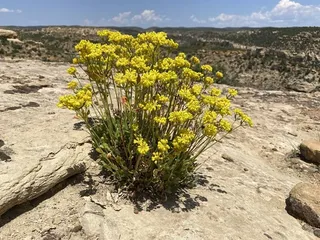 Sulfur buckwheatEriogonum umbellatum6 to 12 inlow waterColorado nativeUSDA 4 to 8
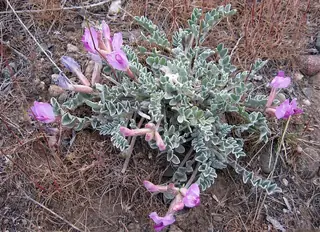 Utah milkvetchAstragalus utahensis6 inlow waterColorado nativeUSDA 3 to 8
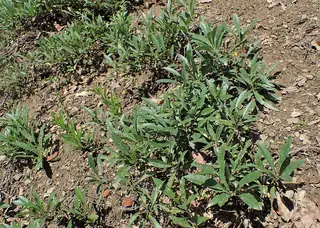 Western sand cherryPrunus besseyi2 to 4 ftlow to medium waterColorado nativeUSDA 3 to 8
 western spring beautyClaytonia lanceolata6 to 18 inmedium waterColorado nativeUSDA 4 to 8
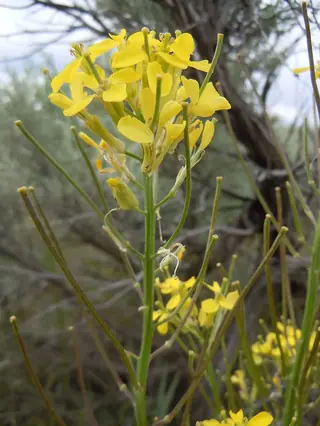 western wallflowerErysimum capitatum12 inlow to medium waterColorado nativeUSDA 3 to 9
 alpine mouse-earCerastium alpinum12 inmedium waterUSDA 3 to 7
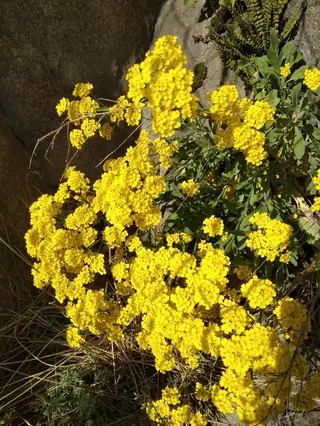 Basket of goldAurinia saxatilis6 to 12 inlow to medium waterUSDA 3 to 7
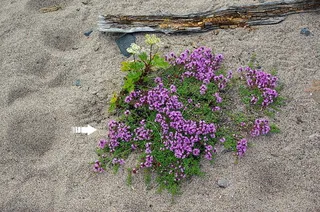 Creeping thyme / wild thymeThymus serpyllum1 to 3 inlow to medium waterUSDA 4 to 9
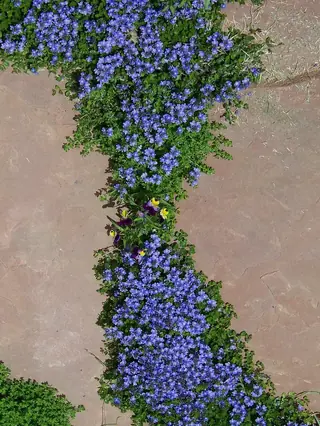 Crystal River veronicaVeronica 'Crystal River'1 to 3 inlow to medium waterUSDA 3 to 8
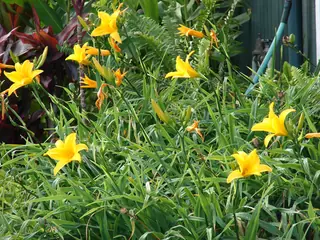 dayliliesHemerocallis sp.12 to 36 inlow to medium waterUSDA 3 to 9
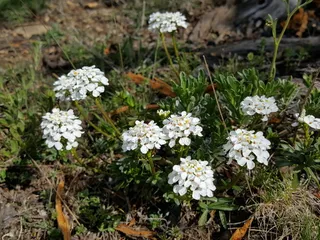 Evergreen candytuftIberis sempervirens8 to 12 inlow to medium waterUSDA 3 to 9
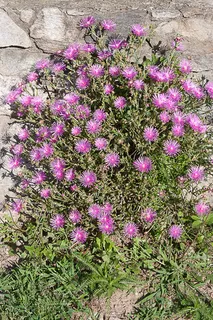 Fire Spinner ice plantDelosperma 'Fire Spinner'1 to 2 inlow waterUSDA 5 to 10
 Golden FleeceSolidago sphacelata12 to 18 inlow waterUSDA 3 to 9
 heartleaf bergeniaBergenia cordifolia12 inmedium waterUSDA 3 to 8
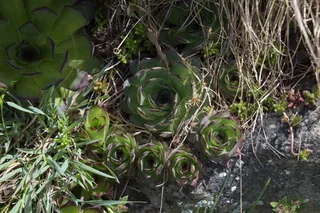 Hens and chicksSempervivum tectorum2 to 6 inlow waterUSDA 3 to 8
- LA VETA LACE GeraniumGeranium magniflorum 'P013S'8 to 12 inlow to medium waterUSDA 4 to 8
 Lady’s mantleAlchemilla mollis12 inmedium to high waterUSDA 3 to 8
- Mesa Verde ice plantDelosperma 'Kelaidis'1 to 3 inlow waterUSDA 5 to 10
 Oriental poppyPapaver orientale24 to 36 inhigh waterUSDA 3 to 8
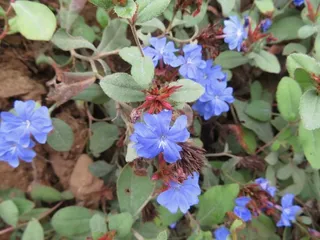 PlumbagoCeratostigma plumbaginoides6 to 10 inlow waterUSDA 5 to 9
- Purple ice plantDelosperma cooperi2 to 4 inlow waterUSDA 5 to 10
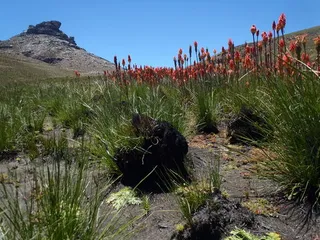 red hot pokerKniphofia uvaria36 inlow waterUSDA 5 to 9
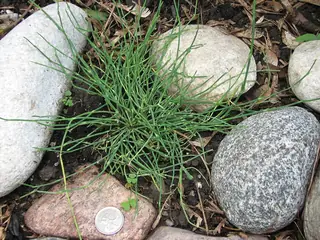 Regel’s jointfirEphedra regeliana6 to 12 inlow waterUSDA 5 to 9
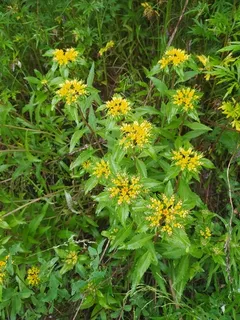 Russian stonecropSedum kamtschaticum4 to 8 inlow waterUSDA 3 to 9
 saxifrageSaxifraga hirsuta6 inhigh waterUSDA 4 to 8
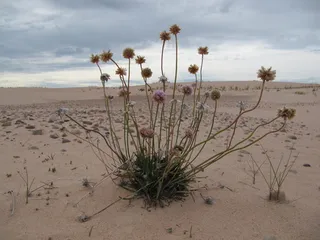 sea thriftArmeria maritima6 inlow to medium waterUSDA 3 to 9
 Silverheels horehoundMarrubium rotundifolium6 to 12 inlow waterUSDA 4 to 8
 STARBURST™ ice plantDelosperma floribundum2 to 4 inlow waterUSDA 5 to 10
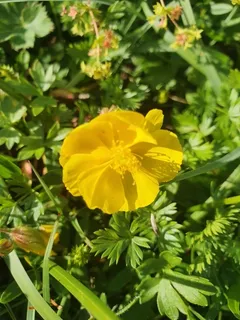 Sun rose / rock roseHelianthemum nummularium6 to 12 inlow waterUSDA 5 to 8
- Table Mountain ice plantDelosperma 'P001S'1 to 2 inlow waterUSDA 5 to 10
- Turkish veronicaVeronica liwanensis2 to 4 inlow to medium waterUSDA 3 to 8
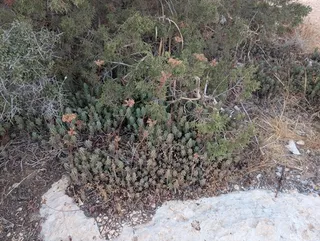 Turquoise Tails blue sedumSedum sediforme4 to 8 inlow waterUSDA 3 to 9
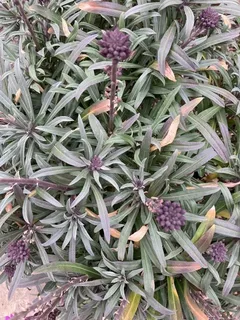 wallflowerErysimum linifolium12 to 36 inlow waterUSDA 3 to 9
 Woolly veronicaVeronica pectinata1 to 3 inlow to medium waterUSDA 3 to 8
Opens groundcovers; the same filter works for perennials.
One type at a time
Ranked pages with a side-by-side table: groundcovers. For mulch, spacing and upkeep, see the fire-resistant landscaping guide.
Why there is no tree list
CSU Extension's Fact Sheet 6.305 has no tree section: its tables cover flowers, groundcovers, shrubs, cacti and turf. Of the trees in Plant Finder, 1 matches a row on it: Saskatoon Serviceberry (7.5). That is too few for a ranked list, and CSU recommends only scores of 8 to 10 within 30 feet of a building.
What CSU does say about trees is clear enough to act on. Junipers, pines, firs and spruces are its common ignitable trees, burning on oil and pitch even when watered. Its rule: "Do not plant new evergreens in zone 2" (5-30 ft). The other side of the coin: "Healthy deciduous trees are less likely to ignite, so they are a better choice for defensible space zones 2 and 3."
Spacing does the rest. CSU's Fire-Adapted Landscaping Practices says to keep existing evergreens near the house thinned to 10 to 15 feet between canopies, to plant new trees on 20 to 25 foot spacing farther out, and to limb trees up 6 to 10 feet without removing more than a third of the height.
Browse trees in the finder and, as CSU advises, favor healthy deciduous ones for zones 2 and 3.
Frequently asked questions
- What are the best fire-resistant plants for Colorado?
- Our top-ranked picks: for groundcovers, Fire Spinner ice plant, Hens and chicks, and Mat penstemon (top of 15 that qualify); for perennials, Harebells, Poppy Mallow, and western spring beauty (top of 32 that qualify). Each is on CSU Extension's ignition-resistant list or Plant Select's, hardy to zone 5 (most of the Front Range; check the plant page in the coldest zone 4 spots) and fine in alkaline soil. No plant is fireproof, so spacing and upkeep still matter.
- What makes a plant fire resistant?
- CSU Extension scores plants on the Idaho Firewise 0 to 10 ignitability scale, where 10 is least ignitable. Attributes that decrease ignitability: low oil or resin content, high moisture content, soap, latex or pectin content, compact growth form, green stems, and drought tolerance. Attributes that increase it: high oil or resin content, low moisture content, tall growth, open form, fine wood (twiggy) stems, and high water need.
- Which plants are most flammable near a house?
- CSU Extension's list says: "Common ignitable trees are junipers, pines, firs and spruces. Common ignitable shrubs are Gambel oak, three-leaf sumac and mountain mahogany." Conifers burn because of their oil and pitch, even when well watered. CSU says not to plant new evergreens in zone 2 (5-30 ft), and to thin existing ones to a minimum canopy separation of 10-15 feet. Note that CSU still scores the 'Autumn Amber' three-leaf sumac cultivar 8, so the cultivar can suit zones 1 and 2 even though the species is ignitable.
- Can I plant right next to my house?
- Zone 1 is 0-5 ft from the structure. CSU Extension's ideal there is non-combustible ground: pavers, gravel, brick or bare ground, with no ignitable mulch. If you do plant, stick to plants scoring 8 or higher, and keep the area free of dry leaves and needles. Keep the nearest branch at least 5 feet from the house. Past that, zone 2 runs 5-30 ft, where small clusters of green, ignition-resistant plants work well; CSU's 8-or-higher bar covers this zone too (our list also holds unscored plants that only Plant Select lists as fire resistant).
- Should I remove plants that are not fire resistant?
- Not necessarily. CSU Extension's Fact Sheet 6.305 says the most important thing is upkeep, whatever a plant's rating: water regularly, do not let dead material build up, and keep clearance between limbs and the ground. Fact Sheet 6.303 adds that within 30 feet of the house you should remove shrubs beneath trees (they act as ladder fuels), keep grasses cut to 4 inches or less, space shrubs at least 2 1/2 times their mature height apart, and thin existing evergreens to 10-15 feet of canopy separation. Further out, in zone 3, remove dead or dying trees and shrubs.
Ask about this guide
Clay, hail, a north wall, a dog that eats everything: ask. The answer is drafted from Colorado sources and cites them.
This is AI-drafted advice from Colorado sources, not a look at your yard. For sprays, cutting or anything you might eat, check with CSU Extension or a licensed pro first.
Three questions free, then a free account.
Questions about this guide
Should I avoid planting junipers close to my house because of wildfire risk?
Yes, keep junipers well away from the house. CSU Extension lists junipers among the common ignitable trees and says not to plant new evergreens in the 5-30 foot band around a building. The first 5 feet is meant to be non-combustible ground, so a juniper hugging the foundation is the wrong plant in the wrong spot.
The reason is oil and pitch. Conifers burn because of that resin even when you water them well, so irrigation doesn't fix it. Savin juniper (Juniperus sabina) is a good example: it's a Front Range workhorse for banks and medians, but its resinous foliage makes it a poor fit for beds against the house, and Blue Star juniper carries the same ignitable-genus flag.
This doesn't mean you must rip out every juniper you already have. CSU says upkeep matters most whatever a plant's rating: keep it watered, clear out dead material, and keep limbs off the ground. Within 30 feet of the house, thin existing evergreens to 10-15 feet between canopies, and keep the nearest branch at least 5 feet from the structure. Whether a particular established shrub or tree should come out is a call for a certified arborist or your county Extension office.
For the zone right at the wall, CSU's ideal is pavers, gravel, brick or bare ground, with no bark or wood-chip mulch. If you want green there, stick to plants CSU scores 8 or higher, such as Fire Spinner ice plant or Hens and chicks.
This week, walk the 5 feet along your foundation and note any juniper, other evergreen or bark mulch sitting there, so you know what to move or swap.
- Frequently asked questions
- Fire-Adapted Landscaping Practices, Fact Sheet 6.303
- Savin juniper
- Blue Star juniper
Drafted with AI, reviewed by the Plant Finder editor on 2026-11-13. Read the full answer
AI-drafted from Colorado sources, reviewed by a person; nobody has seen your yard.
Related guides
Sources
Ignitability scores come from CSU Extension Fact Sheet 6.305. Plants that only Plant Select lists carry no score and are shown for the zone 2 area only. Placement and maintenance guidance comes from Fact Sheet 6.303, which rates no plants.