Fire-resistant plants
Quick answer
A fire-resistant plant is one that is hard to ignite: moist leaves, little oil or resin, a compact shape. No plant is fireproof, and CSU Extension calls all vegetation potential fuel. After the house itself, start with the 5 feet next to it and keep that mostly bare; within 30 feet, plant only what scores 8 or higher on CSU's 0 to 10 ignitability scale.
Fire resistant is shorthand. The term CSU Extension and the Colorado State Forest Service use is ignition resistant, and it means a plant is slow to catch, not that it will not burn. This page covers what makes the difference, which plants are the usual troublemakers, and where to find ranked picks for your region.
What makes a plant fire resistant
CSU Extension's Fact Sheet 6.305 scores plants on a 0 to 10 scale built by Idaho Firewise, where 0 is the most ignitable and 10 the least. Its advice is to plant only species scoring 8, 9 or 10 within the first 30 feet of a building.
The biggest single factor is water. CSU calls a plant's moisture content "the single most important factor governing its volatility." A green, well-watered groundcover is poor fuel. The catch: CSU also notes that many plants become highly ignitable in certain seasons, and that a plant rated ignition resistant can lose that edge over time if nobody looks after it.
Chemistry can beat water, though. Resin and oil make some plants ignitable even when they are well watered, and conifers are the classic case: CSU says they tend to burn because of their oil and pitch, regardless of water content. Deciduous plants run the other way, with wetter leaves and less ignitable chemistry, and a dormant deciduous tree has less fuel in its canopy to carry a fire.
Traits that lower ignitability
- Low oil or resin content
- High moisture content
- Soap, latex or pectin content
- Compact growth form
- Green stems
- Drought tolerance
Traits that raise it
- High oil or resin content
- Low moisture content
- Tall growth
- Open form
- Fine, twiggy wood stems
- High water need
Two looser patterns from the same fact sheet: drought-tolerant plants often resist ignition, because they carry less fuel or hold more moisture, and plants adapted to salty soil, when they are actually growing in salty conditions, may resist burning better.
The zones around a house
Where a plant goes matters as much as what it is. Most houses that burn in a wildfire catch from embers: CSU's Fire-Adapted Landscaping Practices says that in most cases structures ignite from firebrands that can travel long distances. So CSU's order of work starts with the house itself (roof, siding, decks), then moves outward through three zones.
- Zone 1, 0-5 ft. Ideally nothing that burns: pavers, gravel, bare ground. If you plant, plants scoring 8 or higher only.
- Zone 2, 5-30 ft. Small, irregular islands of green, ignition-resistant plants with breaks of rock or gravel between them. Same plant bar as zone 1: a CSU score of 8 or higher (or, unscored, a spot on Plant Select's fire-resistant list).
- Zone 3, 30-100 ft. Thinned and spaced so a fire stays on the ground.
The zone-by-zone version, with spacing, pruning and mulch rules, is in our defensible space guide. The planting side (mulch choices, spacing, upkeep) is in our fire-resistant landscaping guide.
Plants that burn easily, and where to keep them
CSU does not soften this one: most of Colorado's native vegetation is adapted to fire and is ignitable, and the common ignitable plants score below 8. Its fact sheet names names: "Common ignitable trees are junipers, pines, firs and spruces. Common ignitable shrubs are Gambel oak, three-leaf sumac and mountain mahogany."
- Junipers, pines, firs and spruces. Oil and pitch, so they burn even when watered, and CSU says evergreen trees can throw off a lot of heat and embers. Its rule: do not plant new evergreens in zone 2 (5-30 ft), and keep existing ones in very good condition, thinned to at least 10 to 15 feet between canopies.
- Gambel oak, mountain mahogany and three-leaf sumac. The shrubs on CSU's ignitable list. One wrinkle: CSU still scores the 'Autumn Amber' cultivar of three-leaf sumac an 8, so that low form can suit the zones near the house even though the species is on the list.
- Dry grass, ornamental or not. CSU's Fire-Adapted Landscaping Practices says all standing dry grasses, native and non-native, are fine fuels that ignite easily and can spread fire fast. Within 30 feet of the house, keep grass cut to 4 inches or less.
- Wood mulch. Not a plant, but it acts like one. CSU says wood chips, bark, pine needles and shredded rubber readily carry fire. Keep them out of the first 5 feet; gravel is the preferred mulch out to 30 feet.
Ignitable does not mean evict. CSU's practices sheet still explains how to space evergreens in zone 3 (30-100 ft), 10 to 15 feet between crowns, so the advice is about distance and upkeep, not clearing every pine. In Plant Finder, 49 plants are junipers, pines, firs, spruces, Gambel oak or mountain mahogany, and none of them make our fire-resistant picks.
Pick your region
More regions are coming. The traits above hold anywhere, but plant scores are regional: CSU's list is written for Colorado.
A head start: top-ranked picks
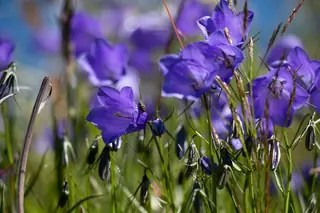
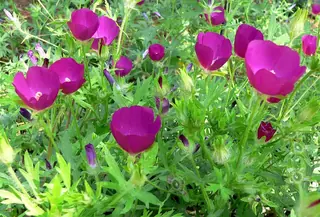
The top two of each type from the Colorado list, ranked by CSU's ignitability score, with a point each for native, low water, in stock at a retailer we track, and Plant Select.
Frequently asked questions
- Are there fireproof plants?
- No plant is fireproof. CSU Extension says there are no fireproof plant species and that all vegetation is potential fuel for fire. Ignition resistant plants are slower to catch, which is why CSU pairs plant choice with spacing and maintenance.
- Are succulents fire resistant?
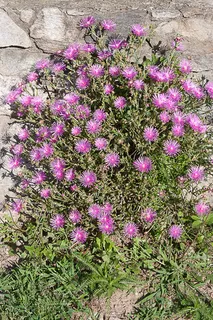
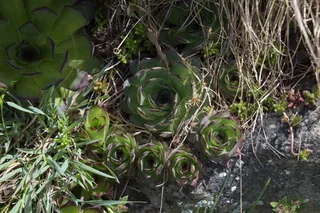
- Many score at the top of CSU Extension's 0 to 10 scale: ice plants (Delosperma), prickly pear (Opuntia) and yellow stonecrop (Sedum lanceolatum) are all rated 10, which fits CSU's top trait, high moisture content. Like any plant, they still need dead material cleared.
- Is a lawn fire resistant?
- A short, green one can be. CSU Extension rates turf grasses mowed to 4 inches highly: buffalograss and blue grama 9, Kentucky bluegrass and perennial ryegrass 10. Dry, standing grass is the opposite, a fine fuel that ignites easily, so keep it cut to 4 inches or less within 30 feet.
- Are deciduous trees safer than evergreens near a house?
- Yes, per CSU Extension. Healthy deciduous trees are less likely to ignite and are the better choice for zones 2 and 3. Conifers tend to burn because of their oil and pitch even when watered, and CSU says not to plant new evergreens in zone 2, 5 to 30 feet from a building.
- Is an all-rock yard the safest option?
- Not necessarily. CSU's Fire-Adapted Landscaping Practices fact sheet says an all-rock landscape is not necessarily the most fire-resistant: green plants store water and slow the spread of fire. The first 5 feet should be non-combustible; past that, islands of green plants with gravel between them work well.
Related guides
Sources
Ignitability scores come from CSU Extension Fact Sheet 6.305. Plants that only Plant Select lists carry no score and are shown for the zone 2 area only. Placement and maintenance guidance comes from Fact Sheet 6.303, which rates no plants.