Fast-growing shade trees for Colorado's Front Range
Quick answer
The best fast-growing shade trees for Front Range yards are thornless honeylocust, American sycamore, and London planetree. The fastest trees are often the weakest-wooded or shortest-lived, so these picks favor trees that grow fast and hold up. On a big, open lot, native narrowleaf cottonwood and peachleaf willow grow even faster but break and fade sooner.
Want summer shade sooner? These large-canopy trees put on height quickly for the Front Range. Each is a fast grower that matures to roughly 40 feet or taller. Growth rate depends on water and site, so deep-water young trees to get them established.
Top picks
Jump to
Every tree here is rated fast growing and matures to 40 ft or more, so the picks rank on whether a tree holds up. Each pick is rated Recommended or Recommended for Most Sites on the 2024 Front Range Tree Recommendation List, hardy to zone 4, fine in alkaline soil, not a high-water tree, and free of invasive and fails-here flags. The first group carries no weak-wood or short-life flag; the second is Colorado natives that do. Picks then score a point each for Colorado native, low-to-medium water, Recommended for Most Sites, long-lived, no iron chlorosis flag, and in stock at a retailer we track, with ties going alphabetically and one pick per species.
Left out of the picks on purpose (they stay in the full list): ash, because emerald ash borer is in Colorado; elms, Siberian elm included, because Dutch elm disease is still around; Freeman maples such as Autumn Blaze, which Denver bans from the street right-of-way, and silver maple (see Autumn Blaze maple alternatives); Russian olive; and non-native willows and poplars flagged for weak wood or short life, since a native cottonwood or willow does the same job.
Fast and built to last
- 1Thornless Common Honeylocust (NORTHERN ACCLAIM®)Rated Recommended for Most Sites, yellow fall color, 30 to 45 ft tall, takes a hot south wall. Note: wrap young trees.
- 2American SycamoreRated Recommended for Most Sites, rounded canopy, 70 to 100 ft tall. Note: anthracnose. Watch for: can yellow from iron chlorosis in alkaline clay.
- 3London Planetree 'EXCLAMATION!®'Rated Recommended for Most Sites, rounded canopy, 60 to 90 ft tall. Note: anthracnose. Watch for: can yellow from iron chlorosis in alkaline clay.
Fast natives with a shorter run
- 1Narrowleaf Poplar (cottonwood)Rated Recommended for Most Sites, gold and yellow fall color, 30 to 50 ft tall. Note: vigorous suckering; forms colonies. Use in native areas only. Watch for: brittle wood, so keep it clear of roofs, wires and drives; short-lived, so plan a successor.
- 2Peachleaf WillowRated Recommended for Most Sites, rounded canopy, 25 to 50 ft tall. Note: more common as a multistem. Watch for: brittle wood, so keep it clear of roofs, wires and drives; short-lived, so plan a successor.
- 3Highland Poplar (cottonwood)Rated Recommended for Most Sites, gold and yellow fall color, 50 to 70 ft tall. Note: too big for small yards. Watch for: brittle wood, so keep it clear of roofs, wires and drives; short-lived, so plan a successor.
- 4Lanceleaf Poplar (cottonwood)Gold and yellow fall color, 40 to 60 ft tall. Note: too big for small yards; Plant male cultivar. Watch for: brittle wood, so keep it clear of roofs, wires and drives; short-lived, so plan a successor.
- 5Plains 'Jeronimus' Poplar (cottonwood)Gold and yellow fall color, 50 to 70 ft tall. Note: too big for small yards; Choose male cultivar. Watch for: short-lived, so plan a successor.
Getting a young shade tree growing
A fast species only grows fast once its roots take hold, and in dry Front Range clay that takes care. Per CSU's winter watering fact sheet, a tree takes about one year per inch of trunk diameter to establish, so a 2-inch tree needs at least two years of help.
- Water often at first, then weekly. CSU Extension says to water daily for the first 1 to 2 weeks, every 2 to 3 days through week 12, then weekly until the roots are established. Check the soil and water to need, not by the calendar alone.
- Water deep, not just the root ball. The winter watering sheet says trees take up water best when it soaks in slowly to about 12 inches, spread under the dripline and beyond.
- Give it a mulch ring. CSU puts 4 to 5 inches of wood chips over the backfill and beyond, kept off the root ball and never piled against the trunk. Trees with a mulch ring typically grow about 20% more than trees with grass up to the trunk.
- Skip the high-nitrogen feed. A new tree needs very little fertilizer, and CSU warns high nitrogen can push leaf growth at the expense of roots.
- Stake only if you need to. CSU's planting guide says a tree set on firm, undisturbed soil does not need staking in most yards; stake for extreme wind or to protect it from people.
- Keep watering through winter. In a dry winter, water young trees about once or twice a month when it is above 40 degrees F and the ground is not frozen, at midday so it soaks in before night. A rule of thumb from the same sheet: about 10 gallons per inch of trunk diameter.
Plan your garden
Not sure what to plant? The finder matches Front Range trees, shrubs, perennials, and groundcover to your soil, water, sun, and zone.
Compare these trees at a glance
| Plant | Mature height | Water | Colorado native | Hardiness | Growth rate |
|---|---|---|---|---|---|
| Boxelder 'Sensation' Maple | 30 to 40 ft | low to medium water | Yes | USDA 2 to 9 | Fast |
| Highland Poplar (cottonwood) | 50 to 70 ft | medium water | Yes | USDA 3 to 8 | Fast |
| Lanceleaf Poplar (cottonwood) | 40 to 60 ft | medium water | Yes | USDA 3 to 8 | Fast |
| Narrowleaf Poplar (cottonwood) | 30 to 50 ft | low to medium water | Yes | USDA 3 to 8 | Fast |
| Peachleaf Willow | 25 to 50 ft | low to medium water | Yes | USDA 3 to 8 | Fast |
| Plains 'Jeronimus' Poplar (cottonwood) | 50 to 70 ft | medium water | Yes | USDA 3 to 8 | Fast |
| Quaking Aspen Poplar (cottonwood) | 20 to 50 ft | medium water | Yes | USDA 1 to 6 | Fast |
| 'Emerald Sunshine' Elm | 35 to 45 ft | medium water | No | USDA 4 to 9 | Fast |
| 'Frontier' Elm | 40 to 50 ft | low to medium water | No | USDA 4 to 9 | Fast |
| 'New Horizon' Elm | 40 to 50 ft | low to medium water | No | USDA 4 to 9 | Fast |
| 'Prospector' Elm | 40 to 50 ft | low to medium water | No | USDA 4 to 9 | Fast |
| ACCOLADE® ('Morton') Elm | 50 to 60 ft | low to medium water | No | USDA 4 to 9 | Fast |
Ordered Colorado-native first, then alphabetically, not a quality ranking. Full list below.
All 43 plants
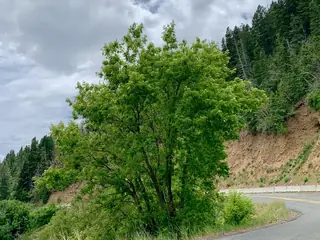 Boxelder 'Sensation' MapleAcer negundo30 to 40 ftlow to medium waterColorado nativeUSDA 2 to 9
 Highland Poplar (cottonwood)Populus x acuminata x sargentii50 to 70 ftmedium waterColorado nativeUSDA 3 to 8
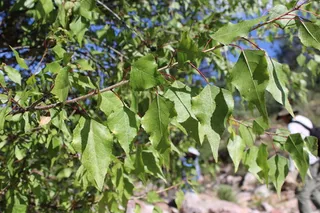 Lanceleaf Poplar (cottonwood)Populus x acuminata40 to 60 ftmedium waterColorado nativeUSDA 3 to 8
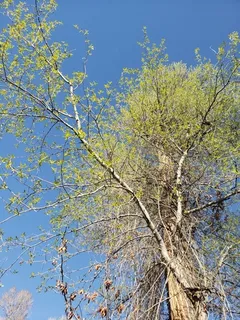 Narrowleaf Poplar (cottonwood)Populus angustifolia30 to 50 ftlow to medium waterColorado nativeUSDA 3 to 8
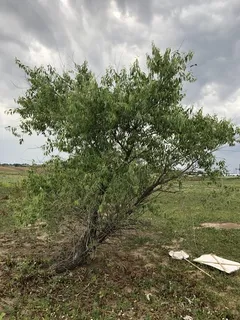 Peachleaf WillowSalix amygdaloides25 to 50 ftlow to medium waterColorado nativeUSDA 3 to 8
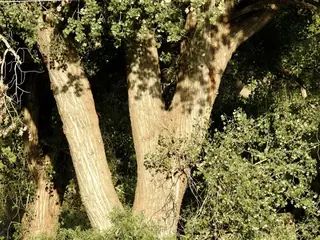 Plains 'Jeronimus' Poplar (cottonwood)Populus deltoides subsp. monilifera50 to 70 ftmedium waterColorado nativeUSDA 3 to 8
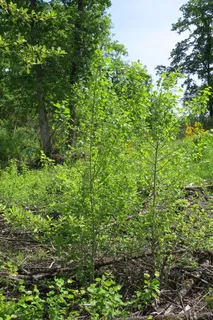 Quaking Aspen Poplar (cottonwood)Populus tremuloides20 to 50 ftmedium waterColorado nativeUSDA 1 to 6
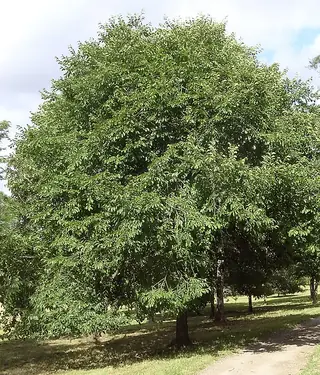 'Emerald Sunshine' ElmUlmus propinqua35 to 45 ftmedium waterUSDA 4 to 9
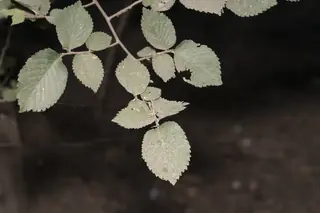 'Frontier' ElmUlmus minor x U. parvifolia40 to 50 ftlow to medium waterUSDA 4 to 9
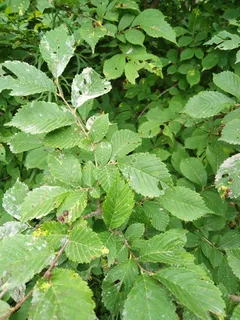 'New Horizon' ElmUlmus japonica x U. pumila 'New Horizon'40 to 50 ftlow to medium waterUSDA 4 to 9
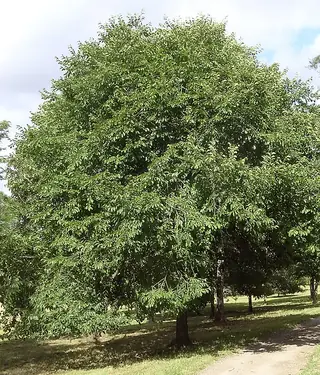 'Prospector' ElmUlmus davidiana var. japonica40 to 50 ftlow to medium waterUSDA 4 to 9
- ACCOLADE® ('Morton') ElmUlmus davidiana var. japonica50 to 60 ftlow to medium waterUSDA 4 to 9
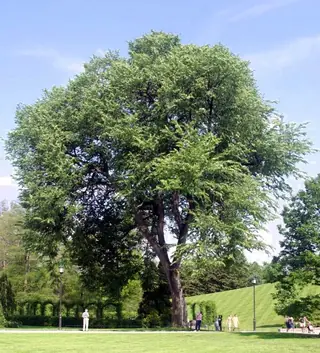 American ElmUlmus americana50 to 70 ftlow to medium waterUSDA 2 to 9
 American SycamorePlatanus occidentalis70 to 100 ftmedium to high waterUSDA 4 to 9
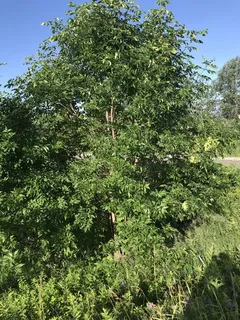 Ash speciesFraxinus40 to 60 ftmedium waterUSDA 3 to 9
 Asian White BirchBetula platyphylla30 to 40 ftmedium to high waterUSDA 3 to 7
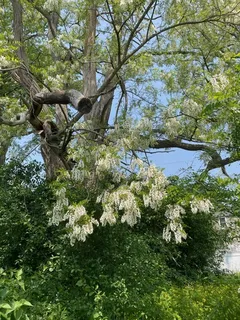 Black Locust 'Purple Robe'Robinia pseudoacacia30 to 50 ftmedium waterUSDA 3 to 8
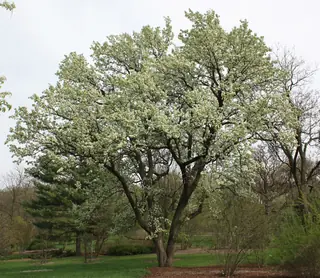 Callery Pear ('Bradford')Pyrus calleryana30 to 50 ftmedium waterUSDA 5 to 9
- Callery Pear (Aristocrat)Pyrus calleryana25 to 40 ftlow to medium waterUSDA 5 to 9
- Chinese ElmUlmus parvifolia40 to 50 ftmedium waterUSDA 4 to 9
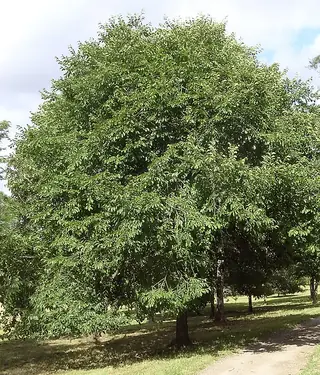 David ElmUlmus davidiana40 to 50 ftlow to medium waterUSDA 4 to 9
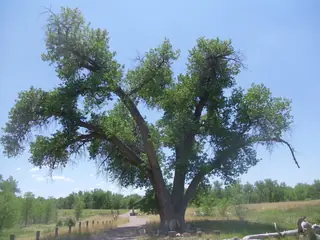 Eastern Poplar (cottonwood)Populus deltoides50 to 80 ftmedium to high waterUSDA 2 to 9
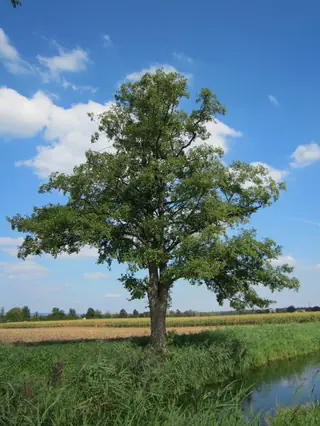 European AlderAlnus glutinosa40 to 60 ftmedium to high waterUSDA 3 to 7
 European White BirchBetula pendula30 to 40 ftmedium to high waterUSDA 3 to 7
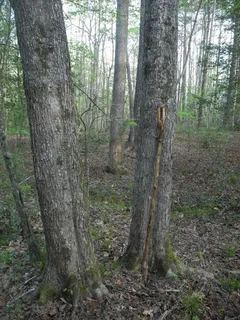 Freeman MapleAcer x freemanii40 to 60 ftmedium waterUSDA 4 to 8
 London Planetree 'EXCLAMATION!®'Platanus x acerifolia60 to 90 ftmedium to high waterUSDA 4 to 9
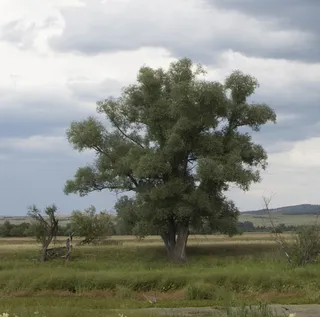 Niobe Weeping WillowSalix alba50 to 70 fthigh waterUSDA 3 to 8
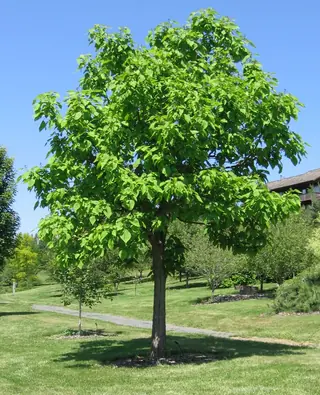 Northern/Western CatalpaCatalpa speciosa40 to 60 ftlow to medium waterUSDA 4 to 8
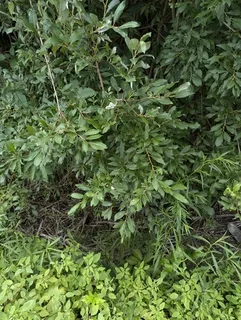 Prairie Cascade WillowSalix x 'Prairie Cascade'35 to 45 fthigh waterUSDA 3 to 8
- PRAIRIE GOLD® Poplar (cottonwood)Populus tremuloides30 to 40 ftmedium waterUSDA 1 to 6
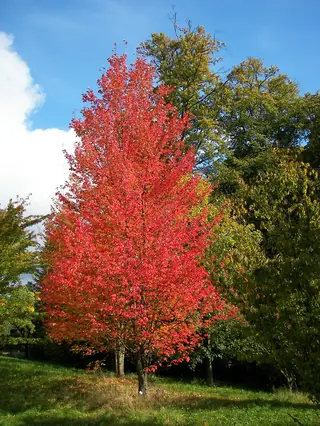 Red MapleAcer rubrum40 to 60 ftmedium waterUSDA 3 to 9
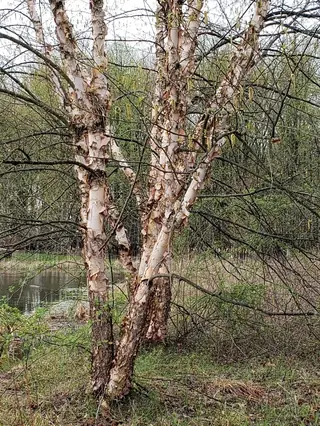 River BirchBetula nigra40 to 70 ftmedium to high waterUSDA 4 to 9
- Russian Golden WillowSalix alba40 to 60 fthigh waterUSDA 3 to 8
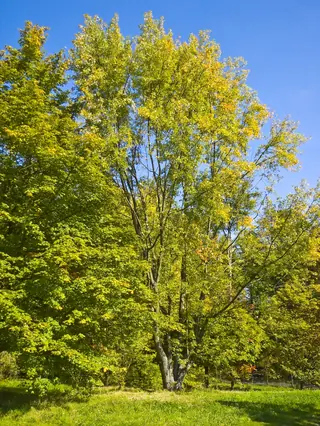 Silver MapleAcer saccharinum50 to 70 ftmedium waterUSDA 3 to 9
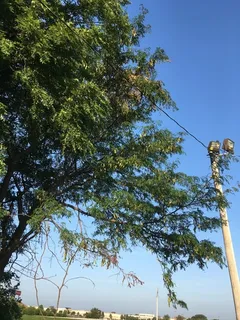 Thornless Common Honeylocust (IMPERIAL®)Gleditsia triacanthos40 to 50 ftlow to medium waterUSDA 3 to 9
- Thornless Common Honeylocust (NORTHERN ACCLAIM®)Gleditsia triacanthos30 to 45 ftlow to medium waterUSDA 3 to 9
- Thornless Common Honeylocust (SUNBURST®)Gleditsia triacanthos30 to 40 ftlow to medium waterUSDA 3 to 9
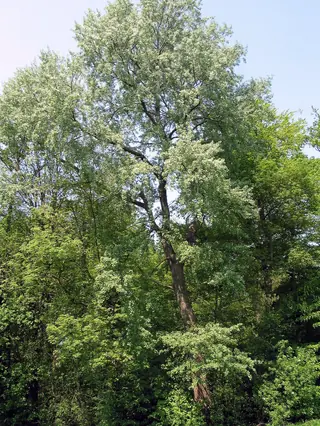 Tower PoplarPopulus x canescens 'Tower'40 to 50 ftmedium to high waterUSDA 3 to 8
 TRIUMPH® ElmUlmus x 'Morton Glossy'50 to 60 ftlow to medium waterUSDA 4 to 9
 Tuliptree (EMERALD CITY®)Liriodendron tulipifera50 to 80 ftmedium waterUSDA 4 to 9
- Tuliptree (species)Liriodendron tulipifera50 to 80 ftmedium waterUSDA 4 to 9
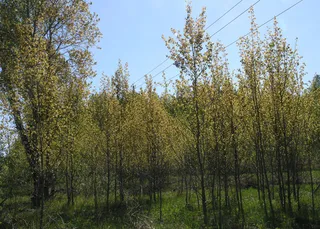 Upright European Poplar (cottonwood)Populus tremula 'Erecta'30 to 40 ftmedium waterUSDA 3 to 8
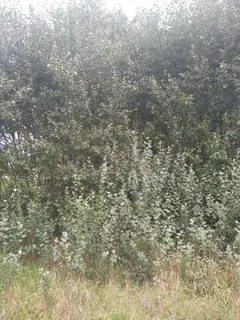 White poplarPopulus alba40 to 70 fthigh waterUSDA 3 to 8
Frequently asked questions
- What is the fastest-growing shade tree for Colorado?
- All 43 trees on this page are rated fast growing, so speed alone does not pick a winner. 23 of them carry a weak-wood or short-life flag, and the quickest of all are the cottonwoods and willows. For fast shade that lasts, start with thornless honeylocust, American sycamore, and London planetree.
- Which fast-growing trees should I avoid?
- 9 of the 43 are rated Not Recommended on the 2024 Front Range Tree Recommendation List, including silver maple, Freeman maple (Autumn Blaze), ash, and Callery pear. They stay on this list so you can look them up; our trees to avoid page covers why the common ones struggle here.
- Are cottonwoods and willows good shade trees?
- In the right spot. Native narrowleaf cottonwood, peachleaf willow, and Highland cottonwood grow fast and take our soil, but the 2024 list flags them for weak wood or short life, so give them a big, open space away from the house, roofs and wires, and plan a successor.
- How can I make a new shade tree grow faster?
- Get the roots going. CSU Extension says to water daily for the first 1 to 2 weeks, every 2 to 3 days until week 12, then weekly until established, and to keep a 4 to 5 inch wood chip mulch ring off the trunk: mulched trees typically grow about 20% more than trees with grass to the trunk. Skip high-nitrogen fertilizer, which favors leaves over roots.
- How much water do these trees need?
- Once established, the 43 trees here are rated 15 low to medium water, 16 medium water, 8 medium to high water, and 4 high water. Every one needs regular deep watering while it establishes, which CSU Extension puts at about one year per inch of trunk diameter, plus monthly winter watering in dry spells.
- Do fast-growing trees have weaker wood?
- Often, yes. Fast growth tends to come with softer wood and a shorter life, which is why silver maple is on our trees-to-avoid list. 23 of the 43 trees here carry a weak-wood or short-life flag (Boxelder 'Sensation' Maple, Highland Poplar (cottonwood), and Lanceleaf Poplar (cottonwood)). If you want speed and staying power, look at the long-lived ones: American Sycamore, London Planetree 'EXCLAMATION!®', and Red Maple.
- How big do these trees get?
- Mature heights range from about 20 to 100 ft across the 43 trees on this list. Each plant's page lists its exact mature size and spread.
- Which of these are Colorado native?
- 7 of the 43 trees are Colorado natives, including Boxelder 'Sensation' Maple, Highland Poplar (cottonwood), Lanceleaf Poplar (cottonwood), and Narrowleaf Poplar (cottonwood).
- How were these trees selected?
- All 43 trees are rated fast growing and reach 40 ft or more in our plant records, which carry each tree's rating and site flags from the 2024 Front Range Tree Recommendation List; each tree page lists its own sources. The top picks follow the rule stated with them. This is a reference guide, not a paid listing.
Sources
The planting and watering guidance comes from the CSU Extension pages below. Growth rates, sizes, water needs, lifespan and the weak-wood, short-life and chlorosis flags come from each tree's record, which carries its rating from the 2024 list; each tree page lists its own sources.
Related guides
- Low-water trees for the Colorado Front Range
- Colorado native trees for the Front Range
- Best shade trees for the Colorado Front Range
- Small trees for Front Range yards
- Front Range plants that are toxic to dogs
- Trees to avoid on the Colorado Front Range
- Deer-resistant plants and shrubs for Colorado's Front Range
- Best fall color trees for the Colorado Front Range
- Best pollinator trees for the Colorado Front Range
- Native plants of Colorado for Front Range yards
- Xeriscape plants for Colorado
- Evergreen privacy trees for Colorado's Front Range
- Salt-tolerant trees and shrubs for the Front Range
- Hail-tolerant trees and shrubs for the Front Range