Autumn Blaze maple in Colorado: why it struggles, and what to plant instead
Quick answer
Autumn Blaze maple is rated Not Recommended for the Front Range on the 2024 Front Range Tree Recommendation List because our alkaline soil gives it iron chlorosis, and Denver bans it from the public right-of-way. Better buys: Shumard oak for big shade and red fall color, Kentucky coffeetree, Miyabe maple if it has to be a maple, ACCOLADE elm for speed.
Autumn Blaze is a garden-center staple, so it is probably the first maple you see at the nursery. On the Front Range it is a gamble. Here is what goes wrong, when it can work anyway, and seven trees from the recommended list that give you the shade and the fall color without the soil fight.
Plan your garden
Not sure what to plant? The finder matches Front Range trees, shrubs, perennials, and groundcover to your soil, water, sun, and zone.
Why Autumn Blaze struggles here
Autumn Blaze is a Freeman maple (Acer x freemanii 'Jeffersred'), a cross between red maple and silver maple. It sells because it grows fast and turns a big, reliable red in fall. The catch is underground.
Our soil locks up its iron
Most Front Range soil is alkaline. CSU Extension explains that above pH 7.0, iron in the soil gets chemically tied up in forms roots cannot absorb, even when there is plenty of it. Red maple, one of Autumn Blaze's parents, is on CSU's list of trees highly susceptible to the result, iron chlorosis: leaves go yellow between green veins, growth stalls, and a tree that stays chlorotic year after year slowly declines. Overwatering and compacted soil make it worse.
What the 2024 list says
The 2024 Front Range Tree Recommendation List rates the whole Freeman group, Autumn Blaze included, Not Recommended, with the note "Develops chlorosis in alkaline soils." It flags soil chemistry as the critical problem, and also cautions that Freeman maples throw up suckers and reseed. More on the Autumn Blaze plant page.
Treatment works, then wears off
You can green up a chlorotic maple, but per CSU, iron chelates in the soil last anywhere from less than a season to about two years, and iron sulfate plus sulfur up to three or four years. So it is a standing appointment, not a fix. CSU's own advice for high-pH soils is to pick a tree that tolerates them in the first place.
Banned from the street strip
If the tree is going in the strip between sidewalk and street in Denver, the question is settled for you. The City Forester's Street Tree Planting Guide says: "Per OCF Rules and Regulations, the following trees may not be planted in the public right-of-way due to safety concerns, pest/disease concerns, and/or invasiveness," and the list includes "Acer x freemanii (all cultivars), including Autumn Blaze maple." (Denver Street Tree Planting Guide.) Planting any street tree there also needs a free permit from the City Forester. Other cities set their own rules, so check yours.
When an Autumn Blaze can be fine
Chlorosis is about the dirt under the tree, not a curse on the cultivar. CSU PlantTalk puts it as Autumn Blaze "does suffer some from iron chlorosis," and CSU ties the problem to high pH, soggy soil and compaction. So an Autumn Blaze in soil that tests closer to neutral, drains well and is not overwatered can stay green.
- Thinking of planting one anyway? Get a soil test first. If the pH comes back high, which is the usual result here, put the money toward one of the trees below.
- Already have one that is yellowing? It is not an emergency. Ease off the water if the soil stays wet, keep mowers and foot traffic off the root zone, and budget for repeat iron treatments if you want to keep it green. Why is my tree dying in Colorado helps rule out other causes.
Better trees to buy instead, ranked
Ranked by how close each comes to what Autumn Blaze promises (big shade, fall color, speed). All seven are rated for the Front Range on the 2024 list, none is flagged there for soil chemistry, and all appear on Denver's Approved Street Tree List, as the species or a named cultivar. Five different genera, too, so your block does not end up with one tree on repeat.
One caveat: CSU names whole groups like maple, elm and linden as prone to chlorosis, so no tree is immune if the soil is soggy or compacted. The 2024 list judges species by species, which is why these made the cut and Autumn Blaze did not.
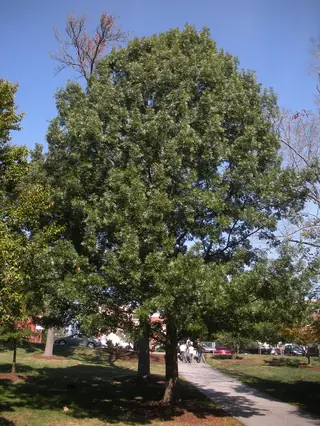 1. Shumard oak Quercus shumardiiRecommended for Most Sites · 40 to 60 ft tall · moderate growth · low to medium waterThe closest swap for what the Autumn Blaze tag promises: a big shade tree that turns red in fall, with no concerns flagged on the 2024 list. Its one note is to buy from a northern seed source, so ask the nursery where it was grown.
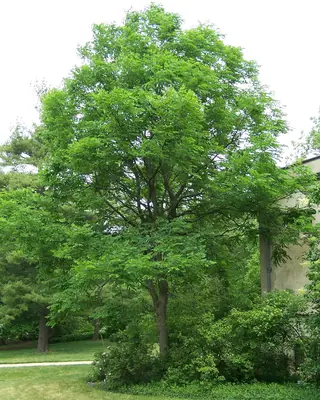 2. Kentucky coffeetree Gymnocladus dioicusRecommended · 60 to 75 ft tall · moderate growth · low to medium waterBig, long-lived, rated high for hail, and nothing flagged on the list. Fall color is yellow rather than red, and female trees drop messy pods, so ask for a seedless cultivar like Espresso.
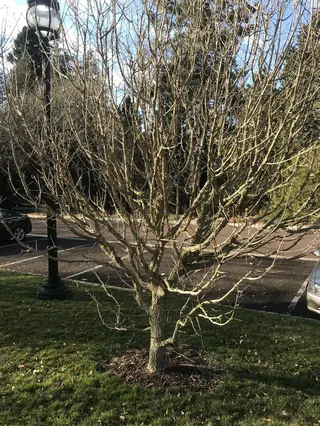 3. Miyabe maple Acer miyabeiRecommended for Most Sites · 30 to 40 ft tall · slow growth · low to medium waterIf it has to be a maple. The list does not flag it for soil chemistry the way it flags Autumn Blaze, and it colors orange, red and yellow. It is smaller and slower, hardiness varies by source, and it sulks after transplanting, so start with smaller stock.
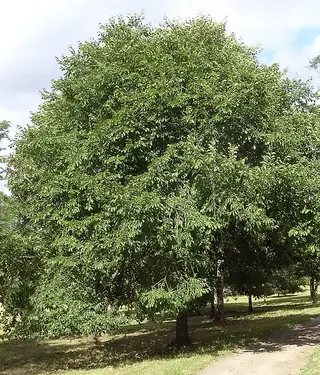 4. ACCOLADE elm Ulmus davidiana var. japonicaRecommended · 50 to 60 ft tall · fast growth · low to medium waterThe pick for speed, which is the other thing people buy Autumn Blaze for. The list notes it resists elm leaf beetle and does not get scale. Fall color is yellow.
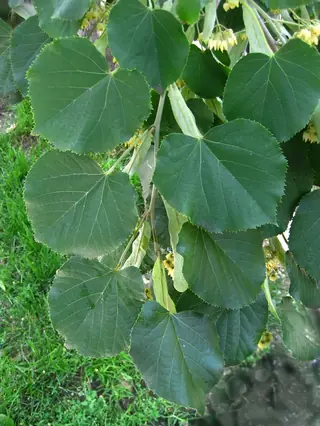 5. American linden Tilia americanaRecommended · 50 to 75 ft tall · moderate growth · medium waterDense summer shade and early-summer flowers that pollinators work hard. It wants steadier water than the others, and leaf edges brown in hot, dry wind, so give it a sheltered spot.
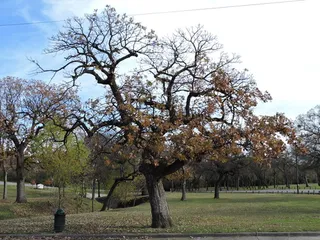 6. Bur oak Quercus macrocarpaRecommended · 60 to 80 ft tall · slow growth · low to medium waterThe long game. Bur oak takes clay, low water and high wind, and lives for generations. It is slow, so buy the biggest one you can afford.
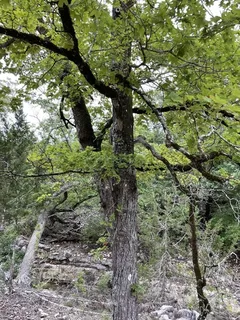 7. Bigtooth maple Acer grandidentatumRecommended · 20 to 30 ft tall · slow growth · low to medium waterA native maple with the red-orange fall color, flagged for nothing on the list. It is a small, slow tree and stocked less often, so it suits a smaller yard and a buyer willing to call around.
Compare them head to head
- Autumn Blaze maple vs bigtooth maple
- Kentucky coffeetree vs honeylocust
- Bur oak vs swamp white oak
- American linden vs littleleaf linden
Planting in Denver specifically? Best shade trees for Denver ranks them for the city's heat, hail and wind.
More trees by need
Frequently asked questions
- Is Autumn Blaze maple a good tree for Colorado?
- Usually not on the Front Range. The 2024 Front Range Tree Recommendation List rates it Not Recommended because it develops iron chlorosis in our alkaline soils. It can do fine in soil that tests near neutral and is not overwatered, but that is the exception here, not the rule.
- Why are Autumn Blaze maple leaves turning yellow in Colorado?
- Most likely iron chlorosis. In alkaline soil the iron is present but chemically locked up, so the tree cannot take it in. The tell is yellow leaves with green veins. Overwatering and compacted soil make it worse.
- Can I plant an Autumn Blaze maple as a street tree in Denver?
- No. Denver's Office of the City Forester lists Acer x freemanii, all cultivars including Autumn Blaze, among the trees that may not be planted in the public right-of-way. Street trees there also need a free planting permit.
- What maple can I plant instead of Autumn Blaze?
- Miyabe maple and bigtooth maple. Neither is flagged for soil chemistry on the 2024 list, and both have good fall color. Both are smaller and slower than Autumn Blaze, so if you need big shade fast, look at Shumard oak or ACCOLADE elm instead.
- Can I fix chlorosis on an Autumn Blaze I already have?
- You can improve it. CSU Extension notes iron chelates in the soil last from less than a season to about two years, and iron sulfate with sulfur up to three or four, so plan on repeating it. Easing off overwatering and protecting the root zone from compaction help too.
Get the Front Range planting guide
A free monthly email: what to plant, what to avoid, and when, for our clay, hail, and dry winters. No spam, unsubscribe anytime.
Sources
Ratings, list notes, sizes and water needs come from our copy of the 2024 Front Range Tree Recommendation List. Everything else on this page comes from:
- 2024 Front Range Tree Recommendation List (Colorado Tree Coalition, CSU, Colorado State Forest Service)
- CSU Extension, Iron Chlorosis of Woody Plants
- CSU PlantTalk Colorado, Maple Trees
- City and County of Denver, Office of the City Forester: Street Tree Planting Guide (prohibited right-of-way trees)
- City and County of Denver, Office of the City Forester: Approved Street Tree List