Kentucky Coffeetree vs Honeylocust for the Colorado Front Range
Quick answer
For most Front Range yards, plant Kentucky coffeetree, it's a long-lived, trouble-free shade tree that takes our alkaline clay and drought with no serious pests, where honeylocust is fast but shorter-lived, pest-prone, and already overplanted. Choose honeylocust for quick, fine-textured shade in a tight or high-salt spot.
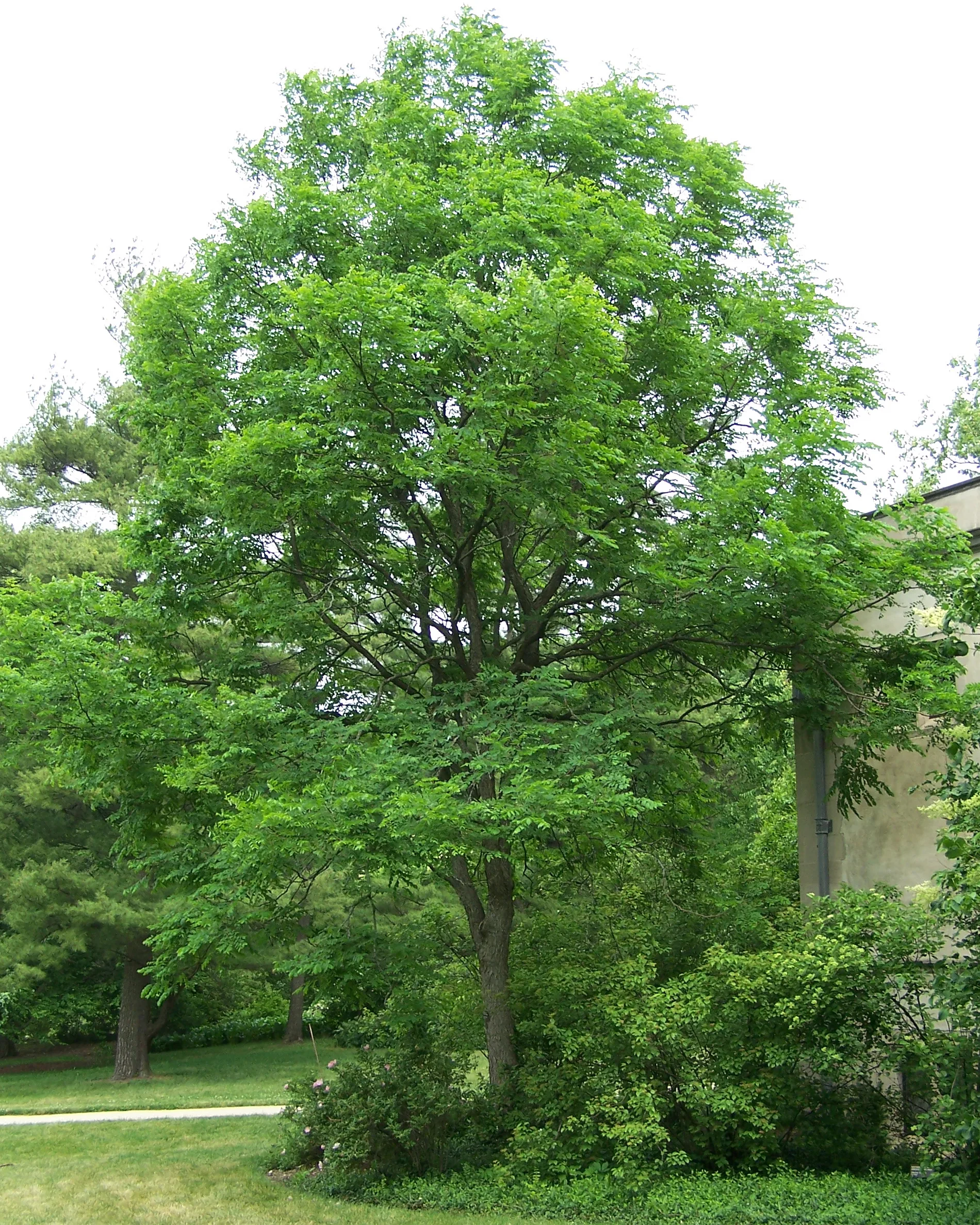
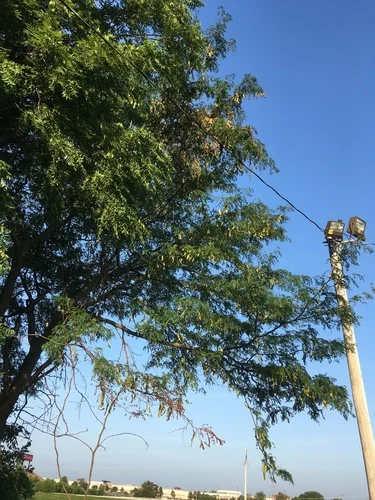
Kentucky Coffeetree
Gymnocladus dioicus
Figures are for the species; seedless male selections (Espresso, Decaf) skip the messy pods.
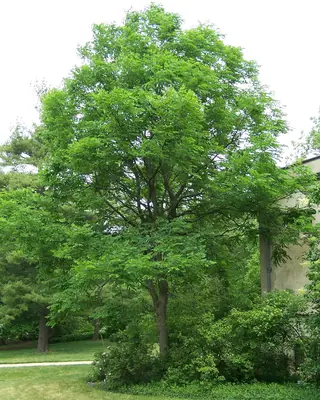
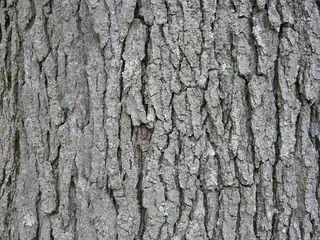
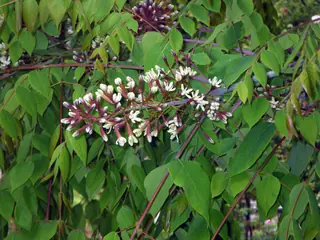
View full Kentucky Coffeetree page →
Photos: Bruce Marlin (CC BY 3), Photo (c)2007 Derek Ramsey (Ram-Man) (CC BY-SA 2), Cillas (CC BY-SA 4)
Honeylocust
Gleditsia triacanthos
Figures are for the thornless, seedless selections (Shademaster, Skyline, Imperial).
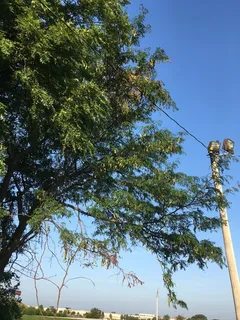
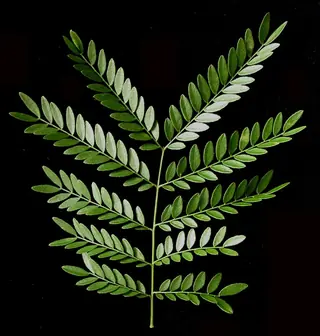
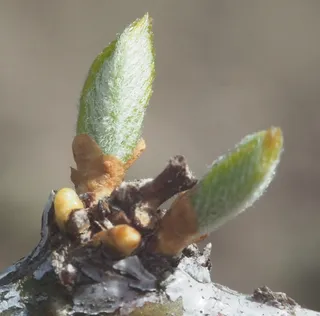
Photos: no rights reserved, (c) Ayotte, Gilles, 1948-, some rights
| Kentucky Coffeetree | Honeylocust | |
|---|---|---|
| Cold hardiness | USDA 3–8 | USDA 3–9 |
| Wind tolerance | Moderate | High✓ Better here |
| Salt tolerance | Moderate | High✓ Better here |
| Mature size | 60–75 ft tall · 40–50 ft wide | 40–50 ft tall · 35–50 ft wide |
| Speed to shade | Moderate, usable shade sooner | Fast |
| Litter / cleanup | Notable leaf/fruit drop | Minimal |
| Problems to watch | Pods on female messy | Honeylocust plant bug and pod gall midge; Mimosa webworm; Thyronectria/Nectria canker |
| Lifespan | Long✓ Better here | Medium |
| Pollinator value | Low | High✓ Better here |
| Mature form | Oval | Spreading |
| Bothwater need low to medium water · alkaline clay tolerant · hail tolerance high · local availability widely available · fall color yellow · sun full | ||
"Better here" marks the choice better suited to typical Front Range conditions, water, soil pH, cold hardiness, and wind. Growth rate and mature size are tradeoffs, not scored.
Ratings from the 2024 Front Range Tree Recommendation List + CSU Extension, how we rate plants →
Where they differ
Both are tough, low-water shade trees that handle Front Range clay, but they trade speed for longevity. Honeylocust grows fast and casts light, fine-textured shade, yet it's only medium-lived and carries a list of regional pests, plant bug, pod gall midge, mimosa webworm, and Nectria canker, made worse because it's been planted on nearly every street. Kentucky coffeetree is slower and leafs out late, but it's flagged for nothing, lives for generations, and its bold bare-branch silhouette is a winter feature.
Which should you plant?
Choose Kentucky Coffeetree if…
- You want a long-lived legacy shade tree with no serious pests
- You'd rather not add to the honeylocust monoculture on your block
- You have room for a 60–75 ft tree and can wait, it's moderate speed and leafs out late
- You'll plant a seedless male selection (Espresso, Decaf) to skip the messy pods
Choose Honeylocust if…
- You want fast, fine dappled shade you can still grow turf or plants under
- You have a smaller lot or a hot hellstrip, it tops out near 40–50 ft and shrugs off salt and wind
- You need shade in a few years, not a few decades
- You can live with occasional pests and a shorter (medium) lifespan
Through the seasons
Kentucky Coffeetree: yellow fall color · bold bare-branch winter form.
Honeylocust: yellow fall color.
Front Range considerations
Both take our alkaline clay, low water, and hail equally well, so on the Front Range the deciding factors are pests, longevity, and overplanting. Honeylocust is flagged for insects and diseases here, and because it was the go-to replacement tree for decades, a street of them is one outbreak away from the same fate as the ash. Coffeetree carries no such flags and diversifies your block. For a hot, salty street strip honeylocust's higher salt and wind tolerance still make it the better tool; everywhere else, coffeetree is the more durable bet. Either way, water deeply the first two or three summers and winter-water monthly to establish roots in dense clay.
Plan your garden
Not sure what to plant? The finder matches Front Range trees, shrubs, perennials, and groundcover to your soil, water, sun, and zone.
Ready to plant Kentucky Coffeetree?
Frequently asked questions
- Is Kentucky coffeetree or honeylocust faster growing?
- Honeylocust is faster, fast growth versus coffeetree's moderate pace, and it leafs out earlier in spring, while coffeetree is famously late. If quick shade is the priority, honeylocust wins; if longevity is, coffeetree does.
- Which is better for Front Range clay soil?
- Both tolerate our alkaline clay well, neither is flagged for soil chemistry. The decision comes down to pests and lifespan, not soil: honeylocust is pest-prone and medium-lived, coffeetree is trouble-light and long-lived.
- Which has better fall color?
- It's a wash, both turn clear yellow in fall. Coffeetree adds bold, contorted bare branches for winter interest; neither is grown for standout autumn color.
- Which is more drought-tolerant?
- Both are rated low-to-medium water and are genuinely drought-tough once established, so it's effectively a tie. Honeylocust also handles de-icing salt and wind a bit better, which matters on an exposed street strip.
- How far from the house should I plant them?
- Coffeetree is the bigger tree, about 60–75 ft tall and 40–50 ft wide, so give it room from the house and power lines; honeylocust stays nearer 40–50 ft and fits smaller lots. Match the tree to the space.
- Are honeylocust trees a problem on the Front Range?
- They're fine trees but badly overplanted, and they carry several regional pests (plant bug, pod gall midge, mimosa webworm, Nectria canker). After losing the ash to emerald ash borer, planting yet another honeylocust adds monoculture risk, diversifying with coffeetree or another species is the safer long-term move.
- Which is messier?
- Female coffeetrees drop large, thick seed pods that need cleanup; honeylocust drops small leaflets and a few pods that mostly vanish into the lawn. Plant a seedless male coffeetree selection (Espresso, Decaf) and that mess advantage disappears.
Bottom line
For most Front Range yards, plant Kentucky Coffeetree. Choose Honeylocust only if you want fast, fine dappled shade you can still grow turf or plants under.
Find Kentucky Coffeetree near you
Related comparisons
Hackberry vs Honeylocust · All tree comparisons
See other low-water Front Range shade trees · Browse all Front Range trees