Best shade trees for Denver
Last updated 2026-09-17
Quick answer
10 best shade trees for Denver are ranked here for Denver's specific conditions, drawn from the 2024 Front Range Tree Recommendation List and regional extension sources, then ordered for Denver's local hazards. Compare them below.
A big shade tree earns its keep in Denver. At a mile high with roughly 300 sunny days and only 12–15 inches of precipitation a year, the summer sun here is far more intense than the same latitude at sea level, and a mature canopy is the cheapest air conditioning a Denver yard will ever get. The catch is that Denver is a hard place to grow a large tree: alkaline, expansive clay loam that swells and shrinks, an emerald-ash-borer quarantine that takes every ash off the table, and hailstorms that shred soft new growth. Every tree below matures to about 40 feet or more, is rated for Colorado's Front Range on the 2024 Front Range Tree Recommendation List, and is ranked here for Denver's specific mix of heat, hail, drying wind, and low water.
Plan your garden
Not sure what to plant? The finder matches Front Range trees, shrubs, perennials, and groundcover to your soil, water, sun, and zone.
What this means in Denver
Skip the ash entirely, emerald ash borer was confirmed in the metro area and untreated ash are now a liability, not shade. Favor tough, alkaline-tolerant species like hackberry, Kentucky coffeetree, bur oak, and honeylocust, and plan to deep-water any young shade tree through its first few summers to get the roots established in that dense clay.
Top picks for Denver
| Plant | Mature height | Water | Colorado native | Hardiness |
|---|---|---|---|---|
| Arizona Cypress | 30–50 ft | low water | — | USDA 7–10 |
| Limber Pine | 30–50 ft | low to medium water | Yes | USDA 4–7 |
| Lodgepole Pine | 30–50 ft | low to medium water | Yes | USDA 3–7 |
| Thornless Common Honeylocust (IMPERIAL®) | 40–50 ft | low to medium water | — | USDA 3–9 |
| Thornless Common Honeylocust (NORTHERN ACCLAIM®) | 30–45 ft | low to medium water | — | USDA 3–9 |
| Colorado Blue Spruce | 15–50 ft | medium to high water | Yes | USDA 2–7 |
| Colorado Spruce | 50–75 ft | medium to high water | Yes | USDA 2–7 |
| Rocky Mountain Douglas fir | 40–80 ft | medium water | Yes | USDA 4–6 |
| White Fir | 50–80 ft | medium water | Yes | USDA 3–7 |
| Cedar of Lebanon | 40–60 ft | medium water | — | USDA 6–9 |
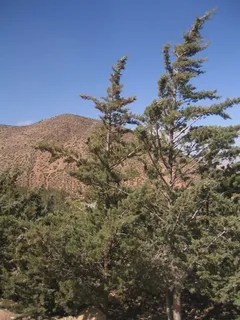 Arizona CypressHesperocyparis arizonica30–50 ftlow waterUSDA 7–10
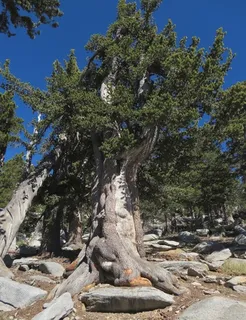 Limber PinePinus flexilis30–50 ftlow to medium waterColorado nativeUSDA 4–7
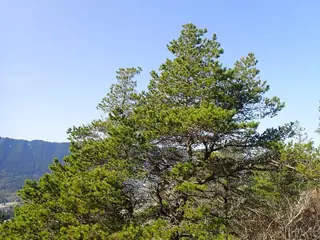 Lodgepole PinePinus contorta30–50 ftlow to medium waterColorado nativeUSDA 3–7
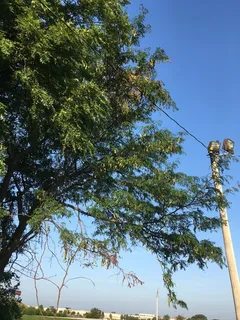 Thornless Common Honeylocust (IMPERIAL®)Gleditsia triacanthos40–50 ftlow to medium waterUSDA 3–9
- Thornless Common Honeylocust (NORTHERN ACCLAIM®)Gleditsia triacanthos30–45 ftlow to medium waterUSDA 3–9
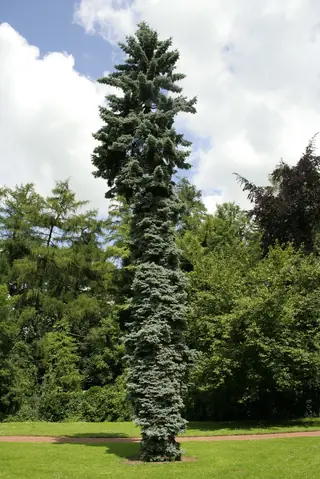 Colorado Blue SprucePicea pungens glauca15–50 ftmedium to high waterColorado nativeUSDA 2–7
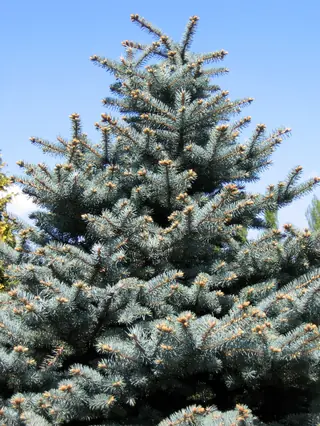 Colorado SprucePicea pungens50–75 ftmedium to high waterColorado nativeUSDA 2–7
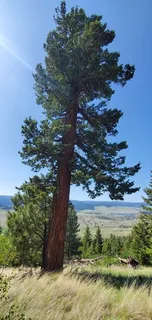 Rocky Mountain Douglas firPseudotsuga menziesii var. glauca40–80 ftmedium waterColorado nativeUSDA 4–6
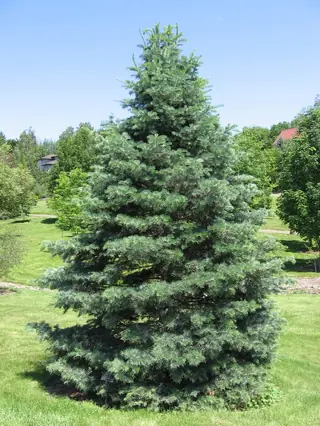 White FirAbies concolor50–80 ftmedium waterColorado nativeUSDA 3–7
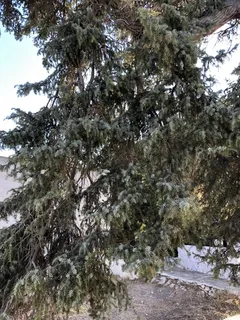 Cedar of LebanonCedrus libani40–60 ftmedium waterUSDA 6–9
Frequently asked questions
- What is the best fast-growing shade tree for Denver?
- Hackberry and honeylocust are among the faster large-canopy trees that still hold up to Denver's wind, hail, and alkaline clay. Deep, infrequent watering for the first few years matters more for speed than the species you pick.
- Are ash trees still a good shade tree in Denver?
- No. With emerald ash borer established in the Denver metro, new ash plantings are discouraged and existing ash need ongoing treatment to survive. Choose a non-ash shade tree from the list above instead.
- How big a shade tree can a typical Denver lot handle?
- Most of these mature to 40–60 feet tall and nearly as wide, so give a large shade tree room from the house, sidewalk, and power lines. Each plant's page lists its mature size and recommended clearance.