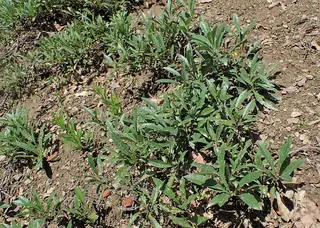
Small soapweed / Great Plains yucca
Yucca glauca
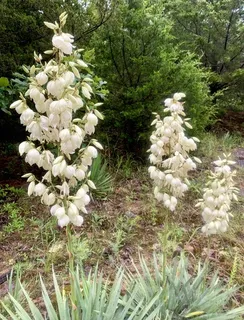
Small soapweed / Great Plains yucca (Yucca glauca) is a Colorado-native shrub suited to the Colorado Front Range. It matures to about 2–4 ft tall and 3–5 ft wide, slow-growing, needs low water, and prefers full sun. Native CO prairie yucca. Spiky evergreen rosette + dramatic creamy flower spikes in summer.
Colorado nativeOn the CSU listlow water2–4 ft tall and 3–5 ft wideXeric / water-wiseZones 1–3 (can be planted near the house)Deer-resistantToxic to dogs
Photos
- Photo 1: (c) Ian Adams, some rights reserved (CC BY)
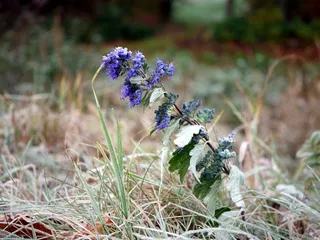
- Photo 2: (c) Doug Macaulay, some rights reserved (CC BY)
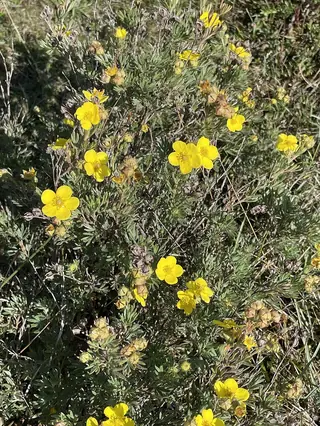
- Photo 3: (c) Ian Adams, some rights reserved (CC BY)
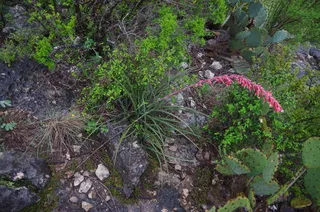
- Photo 4: (c) Douglas Goldman, some rights reserved (CC BY-SA), uploaded by Douglas Goldman
At a glance
Will it survive here?
- Hardiness zones
- USDA 3–9
- Water needs
- low water
- Sun
- Best in full sun.
- Soil
- sandy, well drained only
- Soil pH
- 6.5–8.5
- Hail tolerance
- high
- Wind tolerance
- high
- Salt tolerance
- high
- Firewise (defensible space)
- Zones 1–3 (can be planted near the house)
- Site uses
- Hellstrips / parking strips, Hot south- or west-facing walls, Slopes & erosion control
How big, what shape?
- Mature size
- 2–4 ft tall and 3–5 ft wide
- Planting spacing
- ~5 ft apart (4 ft for a hedge/screen)
- Growth rate
- Slow
What it looks like, and when
- Bloom time
- early summer, mid summer
- Bloom color
- white, cream
- Foliage
- Evergreen
Who else benefits
- Pollinator value
- moderate
- Deer
- Generally deer-resistant
- Colorado native
- Yes
- Native ecoregion
- shortgrass prairie, foothills
Things to know before you plant
- Toxic to dogsConsidered toxic to dogs, so keep pets away from it and check with your vet.
- ThornyIt is thorny, so site it away from paths, seating, and play areas.
Planting & establishment
Bombproof native. Minimal water after first summer.
Frequently asked questions
- Is Small soapweed / Great Plains yucca good for the Colorado Front Range?
- Yes, Small soapweed / Great Plains yucca is a well-suited shrub for Colorado's Front Range.
- What should I know before planting Small soapweed / Great Plains yucca?
- The main things to know: Considered toxic to dogs, so keep pets away from it and check with your vet. It is thorny, so site it away from paths, seating, and play areas.
- How big does Small soapweed / Great Plains yucca get?
- It matures to about 2–4 ft tall and 3–5 ft wide.
- How far apart do I plant Small soapweed / Great Plains yucca?
- Space Small soapweed / Great Plains yucca about 5 ft apart for a full, natural form, or about 4 ft apart for a faster hedge or screen.
- Is Small soapweed / Great Plains yucca hardy on the Front Range?
- Small soapweed / Great Plains yucca is hardy in USDA 3–9. The Colorado Front Range spans roughly USDA 4b–6a, so it is well within range.
- How much water does Small soapweed / Great Plains yucca need?
- It needs low water once established.
- How fast does Small soapweed / Great Plains yucca grow?
- Small soapweed / Great Plains yucca is a slow-growing shrub. Growth rate depends on water and site conditions on the Front Range.
- Is Small soapweed / Great Plains yucca safe for dogs?
- No. Small soapweed / Great Plains yucca is considered toxic to dogs. Keep pets away and check with your vet.
- Is Small soapweed / Great Plains yucca deer-resistant?
- Small soapweed / Great Plains yucca is generally considered deer-resistant, though no plant is deer-proof when browse pressure is high.
- Is Small soapweed / Great Plains yucca a good firewise plant near the house?
- Small soapweed / Great Plains yucca is a lower-fuel choice suitable in defensible-space zones 1–3, it can be planted near the house when kept well irrigated and maintained. This is general suitability guidance based on CSU Extension firewise plant lists, not a guarantee that any plant won't burn, a well-irrigated, well-maintained plant is the goal. Follow CSU Extension defensible-space guidance and check with your local fire district before planting in the wildland-urban interface.