Colorado Spruce
Picea pungens
Colorado Spruce (Picea pungens) is a Colorado-native tree suited to the Colorado Front Range, rated "Recommended" on the 2024 Front Range Tree Recommendation List. It matures to about 50–75 ft tall and 20–30 ft wide, slow-growing, needs medium to high water, and prefers full sun to partial shade. Tussock moth in large trees.
Colorado nativemedium to high water50–75 ft tall and 20–30 ft wideDeer-resistant
Photos
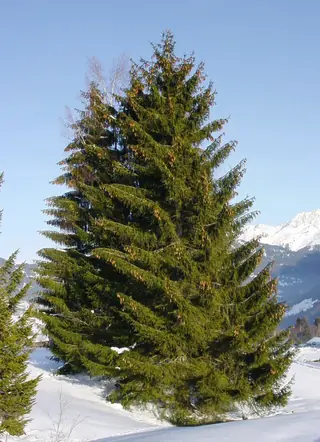
- Photo 1: "Picea pungens 'Montgomery' 2006-05-03" by Agnieszka Kwiecień (Nova) is licensed under CC BY 2.5. To view a copy of this license, visit https://creativecommons.org/licenses/by/2.5/.
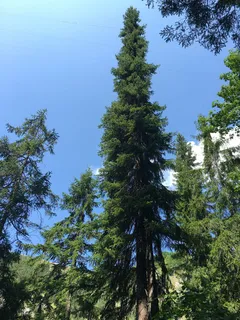
- Photo 2: "Picea pungens 'Koster' Lappen nursery" by Gmihail at Serbian Wikipedia is licensed under CC BY-SA 3.0. To view a copy of this license, visit https://creativecommons.org/licenses/by-sa/3.0/rs/deed.en/.
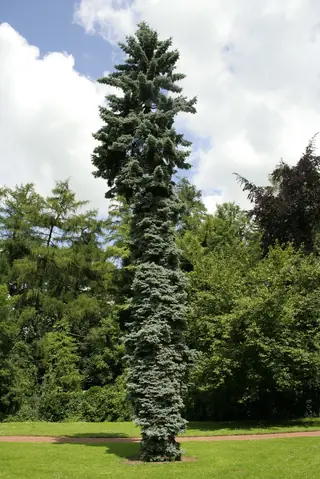
- Photo 3: (c) Logan, some rights reserved (CC BY)
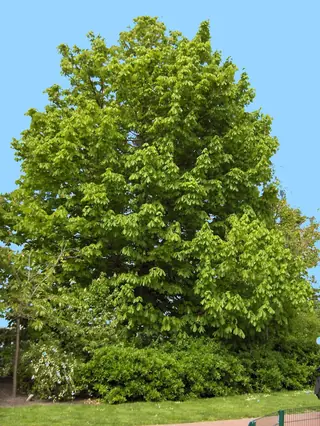
- Photo 4: (c) Lyrae, some rights reserved (CC BY), uploaded by Lyrae
- Photo 5: "Picea pungens foliage Pecos Wilderness" by JustTooLazy is licensed under CC BY 2.0. To view a copy of this license, visit https://creativecommons.org/licenses/by/2.0/.
- Photo 6: "Picea-pungens" is licensed under CC BY-SA 3.0. To view a copy of this license, visit https://creativecommons.org/licenses/by-sa/3.0/.
At a glance
Will it survive here?
- Hardiness zones
- USDA 2–7
- Water needs
- medium to high water
- Sun
- Best in full sun; tolerates partial shade.
- Soil
- clay, loam, sandy
- Soil pH
- 6.0–8.2
- Hail tolerance
- high
- Wind tolerance
- high
- Salt tolerance
- low
- Tolerates
- Cool north foundations
How big, what shape?
- Mature size
- 50–75 ft tall and 20–30 ft wide
- Mature form
- Pyramidal
- Spacing / clearance
- ~30 ft of clearance
- Growth rate
- Slow
- Lifespan
- Long-lived
What it looks like, and when
- Foliage
- Evergreen
Who else benefits
- Pollinator value
- low
- Deer
- Generally deer-resistant
- Colorado native
- Yes
- Native ecoregion
- montane, riparian
Site factors to consider
- Critical: Cold HardinessThe average low suits it fine; our real cold risk is the swings, late frosts, and intense winter sun, so wrap young trunks and give it shelter.
- Critical: Salt ToleranceIt has low salt tolerance, so keep it back from de-iced sidewalks, roadsides, and softener runoff, where salt burns roots and leaf edges.
Common problems on the Front Range
- Spruce ips beetle in stressed trees
- Spruce spider mite on hot, dry sites
- Cytospora canker on lower branches
These are general tendencies for this group of plants on the Front Range, not a diagnosis. Many are stress-driven and preventable with good siting and watering. For a specific plant or an active problem, consult a certified arborist or your local CSU Extension office.
Frequently asked questions
- Is Colorado Spruce good for the Colorado Front Range?
- Yes, Colorado Spruce is a well-suited tree for Colorado's Front Range, rated "Recommended" on the 2024 Front Range Tree Recommendation List.
- How big does Colorado Spruce get?
- It matures to about 50–75 ft tall and 20–30 ft wide.
- How much room does Colorado Spruce need?
- Give Colorado Spruce about 30 ft of clearance from buildings, fences, and other trees so the mature canopy isn't crowded.
- What shape does Colorado Spruce grow into?
- Colorado Spruce typically grows into a pyramidal, conical outline that is widest at the base. This is the species' usual mature form, named cultivars (columnar, weeping, or compact selections) can differ, so check the specific cultivar.
- Is Colorado Spruce hardy on the Front Range?
- Colorado Spruce is hardy in USDA 2–7. The Colorado Front Range spans roughly USDA 4b–6a, so it is well within range. That said, it carries a cold-hardiness caution: The average low suits it fine; our real cold risk is the swings, late frosts, and intense winter sun, so wrap young trunks and give it shelter.
- How much water does Colorado Spruce need?
- It needs medium to high water once established.
- How fast does Colorado Spruce grow?
- Colorado Spruce is a slow-growing tree. Growth rate depends on water and site conditions on the Front Range.
- How long does Colorado Spruce live?
- Colorado Spruce is long-lived, a multi-generational tree given good siting and care. Actual lifespan varies with site, water, and care.
- Is Colorado Spruce native to Colorado?
- Yes. It is a Colorado native.
- Is Colorado Spruce deer-resistant?
- Colorado Spruce is generally considered deer-resistant, though no plant is deer-proof when browse pressure is high.
- Is Colorado Spruce prone to pests or disease on the Front Range?
- Colorado Spruce can be affected by spruce ips beetle in stressed trees and other issues common to this group on the Front Range. These are general tendencies, not a diagnosis, many are stress-driven and preventable with good siting and watering. For a specific plant or an active problem, consult a certified arborist or CSU Extension.