Chinese Juniper
Juniperus chinensis
Chinese Juniper (Juniperus chinensis) is a tree suited to the Colorado Front Range, rated "Recommended" on the 2024 Front Range Tree Recommendation List. It matures to about 15–20 ft tall and 4–8 ft wide, slow-growing, needs low to medium water, and prefers full sun.
Photos
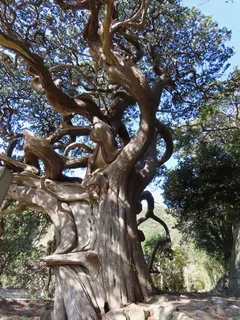
- Photo 1: (c) Marco Mussita, some rights reserved (CC BY)
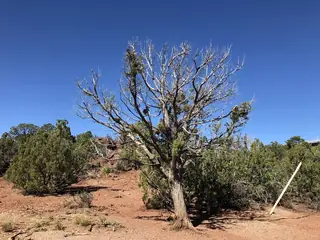
- Photo 2: (c) Tatyana Petrenko, some rights reserved (CC BY)
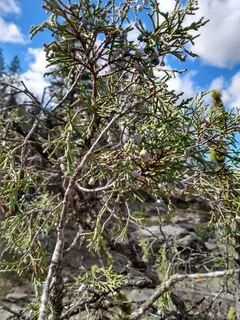
- Photo 3: (c) Илья Руденко, some rights reserved (CC BY)
At a glance
Will it survive here?
- Hardiness zones
- USDA 3–8
- Water needs
- low to medium water
- Sun
- Best in full sun.
- Soil
- loam, sandy, well drained only
- Soil pH
- 6.0–8.2
- Hail tolerance
- high
- Wind tolerance
- high
- Salt tolerance
- moderate
- Tolerates
- Slopes & erosion control
How big, what shape?
- Mature size
- 15–20 ft tall and 4–8 ft wide
- Mature form
- Pyramidal
- Spacing / clearance
- ~8 ft of clearance
- Growth rate
- Slow
- Lifespan
- Long-lived
What it looks like, and when
- Foliage
- Evergreen
Who else benefits
- Pollinator value
- low
- Deer
- Generally deer-resistant
- Colorado native
- No
Common problems on the Front Range
- Spider mites in heat
- Phomopsis and Kabatina tip blight
- Cedar-apple rust alternate host
These are general tendencies for this group of plants on the Front Range, not a diagnosis. Many are stress-driven and preventable with good siting and watering. For a specific plant or an active problem, consult a certified arborist or your local CSU Extension office.
Planting & establishment
Water deeply every 7–10 days through the first 2 summers (less for xeric pines in heavy clay, they're prone to root rot). Winter water 1–2×/month October–March when soil is dry and unfrozen, evergreens transpire year-round. Year 3: taper to twice per month in summer; only during extreme drought thereafter.
Frequently asked questions
- Is Chinese Juniper good for the Colorado Front Range?
- Yes, Chinese Juniper is a well-suited tree for Colorado's Front Range, rated "Recommended" on the 2024 Front Range Tree Recommendation List.
- How big does Chinese Juniper get?
- It matures to about 15–20 ft tall and 4–8 ft wide.
- How much room does Chinese Juniper need?
- Give Chinese Juniper about 8 ft of clearance from buildings, fences, and other trees so the mature canopy isn't crowded.
- What shape does Chinese Juniper grow into?
- Chinese Juniper typically grows into a pyramidal, conical outline that is widest at the base. This is the species' usual mature form, named cultivars (columnar, weeping, or compact selections) can differ, so check the specific cultivar.
- Is Chinese Juniper hardy on the Front Range?
- Chinese Juniper is hardy in USDA 3–8. The Colorado Front Range spans roughly USDA 4b–6a, so it is well within range.
- How much water does Chinese Juniper need?
- It needs low to medium water once established.
- How fast does Chinese Juniper grow?
- Chinese Juniper is a slow-growing tree. Growth rate depends on water and site conditions on the Front Range.
- How long does Chinese Juniper live?
- Chinese Juniper is long-lived, a multi-generational tree given good siting and care. Actual lifespan varies with site, water, and care.
- Is Chinese Juniper native to Colorado?
- No. It is not a Colorado native, but it grows well on the Front Range.
- Is Chinese Juniper deer-resistant?
- Chinese Juniper is generally considered deer-resistant, though no plant is deer-proof when browse pressure is high.
- Is Chinese Juniper prone to pests or disease on the Front Range?
- Chinese Juniper can be affected by spider mites in heat and other issues common to this group on the Front Range. These are general tendencies, not a diagnosis, many are stress-driven and preventable with good siting and watering. For a specific plant or an active problem, consult a certified arborist or CSU Extension.