Hackberry vs Honeylocust for the Colorado Front Range
Quick answer
For most Front Range yards, plant hackberry, a bomb-proof, long-lived shade tree that thrives in our alkaline clay, wind, and drought with only cosmetic problems, where honeylocust is faster but shorter-lived, pest-prone, and badly overplanted. Choose honeylocust for quick, fine-textured shade in a tight spot.
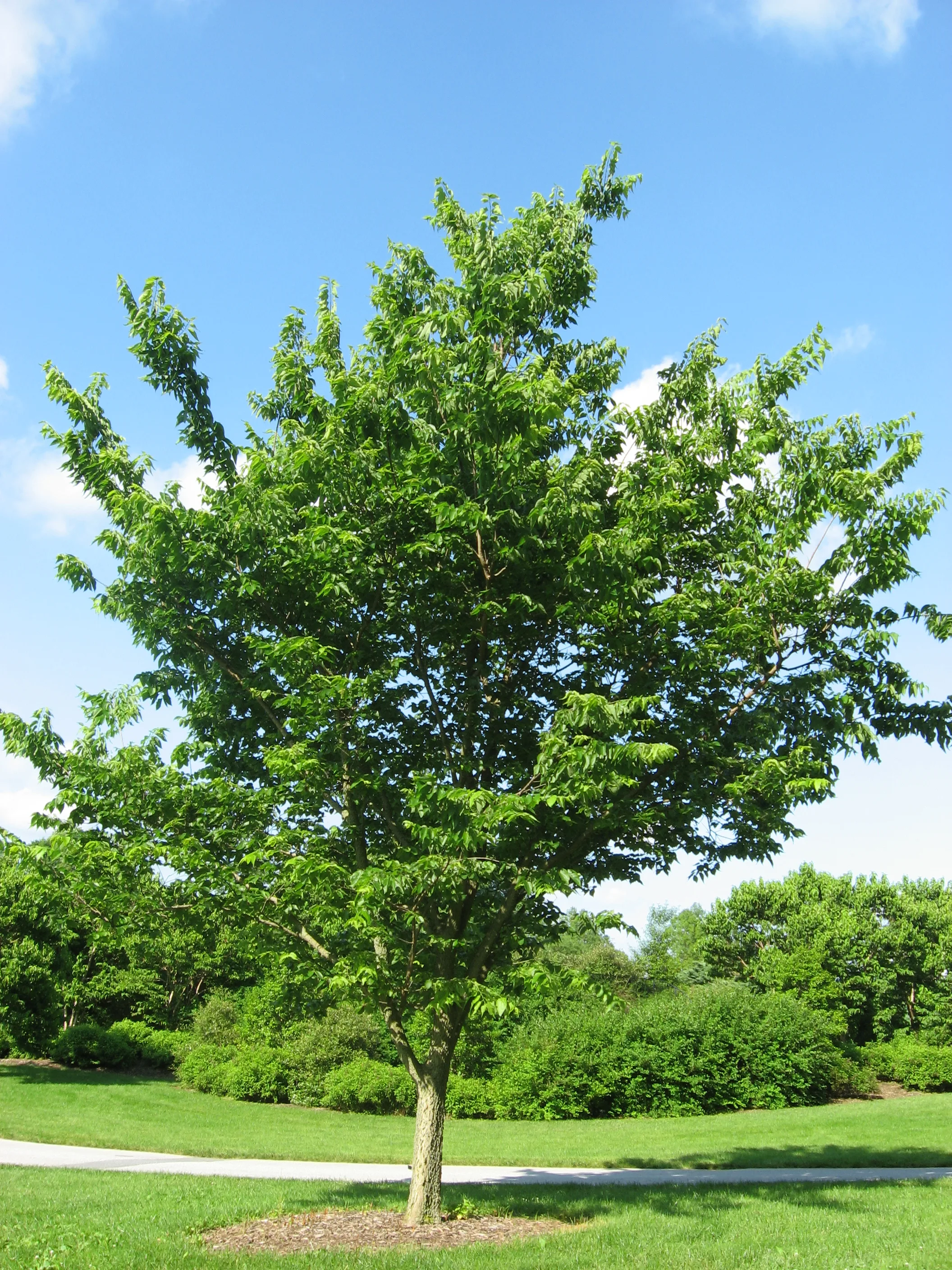
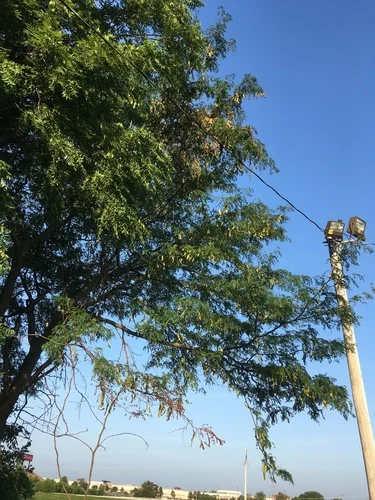
Hackberry
Celtis occidentalis
Figures are for Common Hackberry (incl. Prairie Sentinel® for tighter spaces).
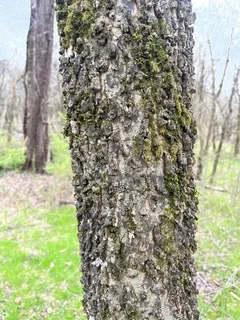
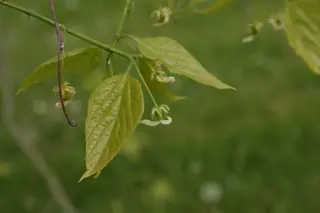
Photos: Chhe (talk), (c) Shelby Lyn Sanders, some rights rese, Sten Porse (CC BY-SA 3)
Honeylocust
Gleditsia triacanthos
Figures are for the thornless, seedless selections (Shademaster, Skyline, Imperial).
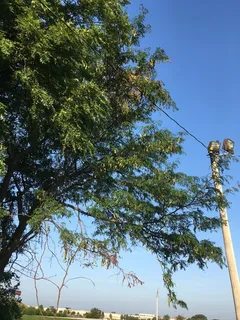
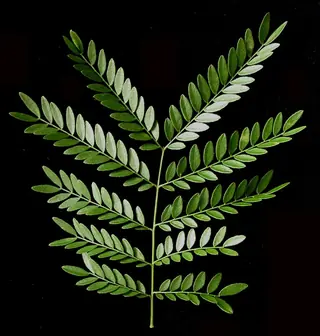
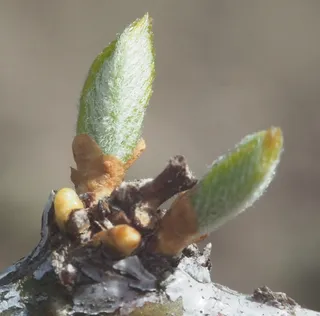
Photos: no rights reserved, (c) Ayotte, Gilles, 1948-, some rights
| Hackberry | Honeylocust | |
|---|---|---|
| Hail tolerance | Moderate | High✓ Better here |
| Mature size | 40–60 ft tall · 40–60 ft wide | 40–50 ft tall · 35–50 ft wide |
| Speed to shade | Moderate, usable shade sooner | Fast |
| Problems to watch | Hackberry nipple gall (cosmetic; Witches'-broom | Honeylocust plant bug and pod gall midge; Mimosa webworm; Thyronectria/Nectria canker |
| Lifespan | Long✓ Better here | Medium |
| Pollinator value | Low | High✓ Better here |
| Mature form | Vase | Spreading |
| Bothwater need low to medium water · alkaline clay tolerant · cold hardiness usda 3–9 · wind tolerance high · salt tolerance high · local availability widely available · litter / cleanup minimal · fall color yellow · sun full | ||
"Better here" marks the choice better suited to typical Front Range conditions, water, soil pH, cold hardiness, and wind. Growth rate and mature size are tradeoffs, not scored.
Ratings from the 2024 Front Range Tree Recommendation List + CSU Extension, how we rate plants →
Where they differ
Both are low-water, alkaline-clay-proof shade trees, but they trade longevity for speed. Hackberry is flagged for nothing serious, just a cosmetic nipple gall and occasional weak wood, and lives for generations with a graceful vase form. Honeylocust grows faster and casts light, fine-textured shade, but it's only medium-lived, carries real pests (plant bug, pod gall midge, mimosa webworm, Nectria canker), and has been planted on nearly every Front Range street.
Which should you plant?
Choose Hackberry if…
- You want a tough, long-lived shade or street tree for alkaline clay
- You're diversifying away from overplanted honeylocust and lost ash
- You have room for a 40–60 ft vase-shaped canopy
- Cosmetic leaf galls don't bother you (they don't harm the tree)
Choose Honeylocust if…
- You want fast, fine dappled shade you can still grow grass under
- You have a smaller lot or a hot hellstrip, it stays nearer 40–50 ft
- You need shade in a few years, not a decade-plus
- You'll accept some pests and a shorter (medium) lifespan
Through the seasons
Hackberry: yellow fall color · bold bare-branch winter form.
Honeylocust: yellow fall color.
Front Range considerations
Both shrug off our alkaline clay, low water, salt, and wind, so the Front Range deciding factors are longevity, pests, and overplanting. Honeylocust is flagged for insects and diseases here, and, like the ash before it, a street planted wall-to-wall with one species is fragile. Hackberry's only knocks are a harmless nipple gall and some brittleness in storms; otherwise it's one of the toughest, most underused shade trees we can grow. Water either deeply for the first two or three summers and winter-water monthly to establish roots in dense clay.
Plan your garden
Not sure what to plant? The finder matches Front Range trees, shrubs, perennials, and groundcover to your soil, water, sun, and zone.
Ready to plant Hackberry?
Frequently asked questions
- Is hackberry or honeylocust faster growing?
- Honeylocust is faster, fast versus hackberry's moderate growth, so it shades sooner. Hackberry trades a little speed for a much longer life and fewer pests.
- Which is better for Front Range clay soil?
- Both thrive in our alkaline clay; neither is flagged for soil chemistry. Hackberry edges it on toughness and longevity, honeylocust on speed.
- Are hackberry galls a problem?
- No. Hackberry nipple gall and witches'-broom are cosmetic, they don't harm the tree's health or lifespan, and they're the main reason this tough tree is unfairly overlooked.
- Which is more drought-tolerant?
- Both are rated low-to-medium water and very drought-tough once established, so it's a tie. Honeylocust takes de-icing salt and wind a touch better on exposed sites.
- How far from the house should I plant them?
- Hackberry matures around 40–60 ft tall and wide with a vase form; honeylocust nearer 40–50 ft and spreading. Give either room from the house, walks, and power lines.
- Why plant hackberry instead of another honeylocust?
- Diversity. Honeylocust is one of the most overplanted Front Range trees, so one pest or canker outbreak could thin whole streets, the ash lesson. Hackberry is just as tough, longer-lived, and far less common.
- Which is messier?
- Both are fairly clean, honeylocust drops tiny leaflets and a few pods that vanish into turf; hackberry drops small berries that birds quickly eat. Neither is a heavy litter tree.
Bottom line
For most Front Range yards, plant Hackberry. Choose Honeylocust only if you want fast, fine dappled shade you can still grow grass under.
Find Hackberry near you
Related comparisons
Kentucky Coffeetree vs Honeylocust · All tree comparisons
See other low-water Front Range shade trees · Browse all Front Range trees