Creeping juniper
Juniperus horizontalis
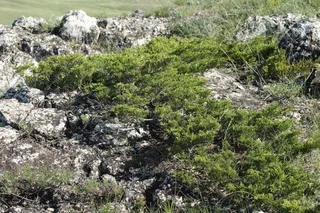
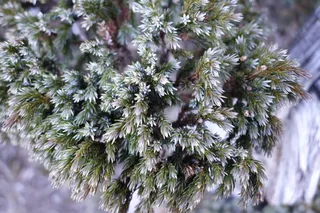
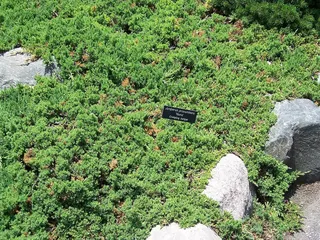
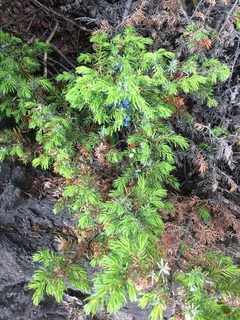
Creeping juniper (Juniperus horizontalis) is a shrub suited to the Colorado Front Range. It matures to about 1–2 ft tall and 6–10 ft wide, slow-growing, needs low water, and prefers full sun. Tough evergreen mat for banks, hellstrips, and hot slopes; native to the northern plains and Rockies, hardy everywhere on the Front Range. 'Wiltonii' hugs the ground, 'Blue Chip' holds steel-blue color all year. Resinous: keep junipers 30 ft from structures.
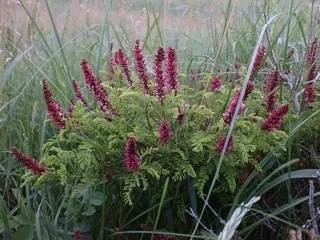
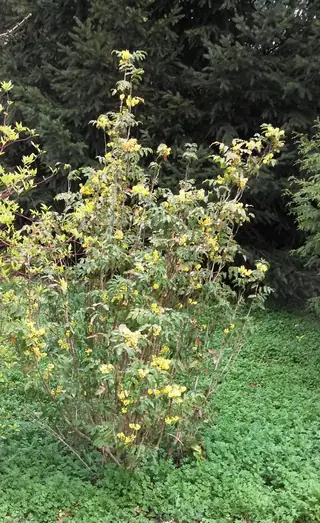
Photos
- Photo 1: no rights reserved
- Photo 2: (c) gwt2102, some rights reserved (CC BY)
- Photo 3: (c) Rose Zappa, some rights reserved (CC BY)
At a glance
Will it survive here?
- Hardiness zones
- USDA 3–9
- Water needs
- low water
- Sun
- Best in full sun.
- Soil
- sandy, loam, clay
- Soil pH
- 6.0–8.5
- Hail tolerance
- high
- Wind tolerance
- high
- Salt tolerance
- high
- Firewise (defensible space)
- Zones 2–3 (keep it back from the house)
- Site uses
- Hellstrips / parking strips, Slopes & erosion control, Hot south- or west-facing walls
How big, what shape?
- Mature size
- 1–2 ft tall and 6–10 ft wide
- Planting spacing
- ~10 ft apart (7 ft for a hedge/screen)
- Growth rate
- Slow
What it looks like, and when
- Foliage
- Evergreen
Who else benefits
- Pollinator value
- low
- Deer
- Generally deer-resistant
- Colorado native
- No
Common problems on the Front Range
- Spider mites in heat
- Phomopsis and Kabatina tip blight
- Cedar-apple rust alternate host
These are general tendencies for this group of plants on the Front Range, not a diagnosis. Many are stress-driven and preventable with good siting and watering. For a specific plant or an active problem, consult a certified arborist or your local CSU Extension office.
Planting & establishment
Water deeply once a week the first two summers, then taper to occasional deep soaks. Overwatering in clay is the main killer; let soil dry between waterings.
- Pruning: light.
- Fruit: wildlife (birds/wildlife).
Frequently asked questions
- Is Creeping juniper good for the Colorado Front Range?
- Yes, Creeping juniper is a well-suited shrub for Colorado's Front Range.
- How big does Creeping juniper get?
- It matures to about 1–2 ft tall and 6–10 ft wide.
- How far apart do I plant Creeping juniper?
- Space Creeping juniper about 10 ft apart for a full, natural form, or about 7 ft apart for a faster hedge or screen.
- Is Creeping juniper hardy on the Front Range?
- Creeping juniper is hardy in USDA 3–9. The Colorado Front Range spans roughly USDA 4b–6a, so it is well within range.
- How much water does Creeping juniper need?
- It needs low water once established.
- How fast does Creeping juniper grow?
- Creeping juniper is a slow-growing shrub. Growth rate depends on water and site conditions on the Front Range.
- Is Creeping juniper native to Colorado?
- No. It is not a Colorado native, but it grows well on the Front Range.
- Is Creeping juniper deer-resistant?
- Creeping juniper is generally considered deer-resistant, though no plant is deer-proof when browse pressure is high.
- Is Creeping juniper a good firewise plant near the house?
- Creeping juniper is suitable in defensible-space zones 2–3, best kept back from the house rather than in the area right against the structure. This is general suitability guidance based on CSU Extension firewise plant lists, not a guarantee that any plant won't burn, a well-irrigated, well-maintained plant is the goal. Follow CSU Extension defensible-space guidance and check with your local fire district before planting in the wildland-urban interface.
- Is Creeping juniper prone to pests or disease on the Front Range?
- Creeping juniper can be affected by spider mites in heat and other issues common to this group on the Front Range. These are general tendencies, not a diagnosis, many are stress-driven and preventable with good siting and watering. For a specific plant or an active problem, consult a certified arborist or CSU Extension.