Lamb's ear
Stachys byzantina
Lamb's ear (Stachys byzantina) is a groundcover suited to the Colorado Front Range. It matures to about 6–12 in tall and 18–36 in wide, needs low to medium water, and prefers full sun to partial shade. Iconic silver woolly foliage; kid-magnet ('feel this!'). Non-flowering cultivars stay tidier.
On the CSU listlow to medium water6–12 in tall and 18–36 in wideXeric / water-wiseZones 1–3 (can be planted near the house)Deer-resistant
Photos
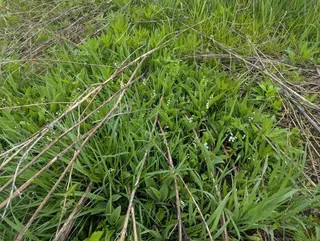
- Photo 1: "Stachys byzantina" by Carl E Lewis is licensed under CC BY 2.0. To view a copy of this license, visit https://creativecommons.org/licenses/by/2.0/.
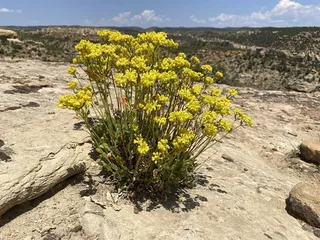
- Photo 2: "Stachys byzantina Minsk" by user:Хомелка is licensed under CC BY 3.0. To view a copy of this license, visit https://creativecommons.org/licenses/by/3.0/.
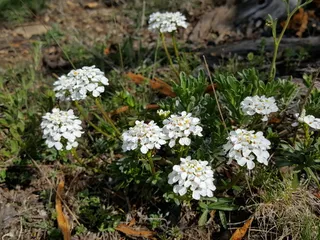
- Photo 3: "Stachys byzantina 3c" by Consultaplantas is licensed under CC BY-SA 4.0. To view a copy of this license, visit https://creativecommons.org/licenses/by-sa/4.0/.
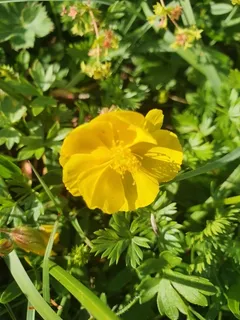
- Photo 4: "0 Stachys byzantina - Yvoire (1)" by Jean-Pol GRANDMONT is licensed under CC BY-SA 3.0. To view a copy of this license, visit https://creativecommons.org/licenses/by-sa/3.0/.
- Photo 5: no rights reserved
- Photo 6: (c) Oleg Kosterin, some rights reserved (CC BY)
At a glance
Will it survive here?
- Hardiness zones
- USDA 4–8
- Water needs
- low to medium water
- Sun
- Best in full sun; tolerates partial shade.
- Soil
- sandy, loam
- Soil pH
- 6.0–8.0
- Hail tolerance
- moderate
- Wind tolerance
- moderate
- Salt tolerance
- moderate
- Firewise (defensible space)
- Zones 1–3 (can be planted near the house)
How big, what shape?
- Mature size
- 6–12 in tall and 18–36 in wide
- Growth habit
- Spreading
- Planting spacing
- ~25–36 in apart
What it looks like, and when
- Bloom time
- early summer, mid summer
- Bloom color
- pink, purple
- Foliage
- Evergreen
- Winter cover
- Strong winter cover
What it will do to your yard
- Foot traffic
- No foot traffic
- Lawn alternative
- No-mow lawn alternative
Who else benefits
- Pollinator value
- moderate
- Deer
- Generally deer-resistant
- Colorado native
- No
Things to know before you plant
- Spreads aggressivelyLamb's ear, self-layers; the mat expands several inches per year
Using Lamb's ear as a groundcover
Lamb's ear spreads steadily. It fills in densely, crowding out most weeds. It holds strong cover through Front Range winters, so the ground doesn't go bare.
Planting & establishment
Water deeply 1×/week first summer to establish. After establishment, water 1–2×/month during dry stretches.
Frequently asked questions
- Is Lamb's ear good for the Colorado Front Range?
- Yes, Lamb's ear is a well-suited groundcover for Colorado's Front Range.
- What should I know before planting Lamb's ear?
- The main things to know: Lamb's ear, self-layers; the mat expands several inches per year
- How big does Lamb's ear get?
- It matures to about 6–12 in tall and 18–36 in wide.
- How far apart do I plant Lamb's ear?
- Space Lamb's ear about 25 in apart for a faster, fuller cover, or up to 36 in apart for a looser planting.
- Is Lamb's ear hardy on the Front Range?
- Lamb's ear is hardy in USDA 4–8. The Colorado Front Range spans roughly USDA 4b–6a, so it is well within range.
- How much water does Lamb's ear need?
- It needs low to medium water once established.
- Is Lamb's ear native to Colorado?
- No. It is not a Colorado native, but it grows well on the Front Range.
- Is Lamb's ear deer-resistant?
- Lamb's ear is generally considered deer-resistant, though no plant is deer-proof when browse pressure is high.
- Is Lamb's ear a good firewise plant near the house?
- Lamb's ear is a lower-fuel choice suitable in defensible-space zones 1–3, it can be planted near the house when kept well irrigated and maintained. This is general suitability guidance based on CSU Extension firewise plant lists, not a guarantee that any plant won't burn, a well-irrigated, well-maintained plant is the goal. Follow CSU Extension defensible-space guidance and check with your local fire district before planting in the wildland-urban interface.
- Can you walk on Lamb's ear?
- Lamb's ear isn't meant for foot traffic, site it where you won't need to walk across it.
- Can Lamb's ear replace a lawn?
- Yes, Lamb's ear works as a no-mow lawn alternative on the Front Range. Expect a season or two of weeding and watering while it fills in before it reads as a lawn replacement.
- Will Lamb's ear spread or stay put?
- Lamb's ear is spreading. Lamb's ear, self-layers; the mat expands several inches per year Give it room to fill in and edit the edges to keep it where you want it.
- Does Lamb's ear stay green in winter?
- Lamb's ear holds strong cover through Front Range winters, so the ground stays protected rather than going bare.