Emerald ash borer in Colorado: treat or remove your ash, and what to plant instead
Quick answer
Emerald ash borer is now in Denver, Boulder, Fort Collins, and 20-plus Front Range cities, and it kills untreated ash. Treat a healthy, valued ash with repeat trunk injections from a licensed applicator; remove one that is already declining or poorly placed (lower-risk window is roughly September to April). Either way, do not plant a new ash, replace it with a different, non-ash shade tree.
If you have an ash tree on the Front Range, emerald ash borer (EAB) is now your problem to plan for, not a someday worry. This invasive beetle has spread across the metro area and kills ash that are left untreated. The good news: you have real choices. Here is how to decide whether your ash is worth treating or better removed, and a diverse shortlist of proven, non-ash trees to plant instead.
Plan your garden
Not sure what to plant? The finder matches Front Range trees, shrubs, perennials, and groundcover to your soil, water, sun, and zone.
Treat or remove? How to decide
There is no quarantine to tell you what to do (Colorado repealed the EAB quarantine in 2019), so it comes down to the tree. EAB is now confirmed in Denver, Boulder, Fort Collins, and more than 20 Front Range cities, and it kills untreated ash, so doing nothing is really a slow decision to remove. Not sure the dieback is EAB and not something else? Why is my tree dying in Colorado helps you rule out the look-alikes first.
Treating makes sense when
- The tree is healthy, well placed, and one you would miss (good shade, good structure, less than about half its canopy thinned).
- You are within striking distance of a known infestation. Treatment is preventive and works best before the borer arrives or early in an infestation, not on a tree that is already collapsing.
- You accept that it is ongoing. Trunk-injection treatments are repeated every year or two, for the life of the tree, by a licensed applicator. It is a commitment, not a one-time fix.
Removing makes sense when
- The ash is already in decline (more than about half the canopy dead or thinning), poorly placed, or you do not want a recurring treatment bill.
- A dead ash gets brittle fast and becomes a hazard, so removing a declining one sooner is cheaper and safer than waiting.
- The lower-risk window to remove an ash is roughly September through April, when the borer is under the bark and not flying, which limits spread. Do not move ash wood or firewood off your property.
Either way, get a certified arborist to look at the specific tree before you commit. The numbers above are rules of thumb, not a diagnosis.
What to plant instead of an ash
A good ash replacement is tough in alkaline clay, lives a long time, and, just as important, is not the same species as every other tree on your block. Mix it up: the reason EAB hits so hard is that we planted ash everywhere. Here are eight proven, non-ash options, each a different genus.
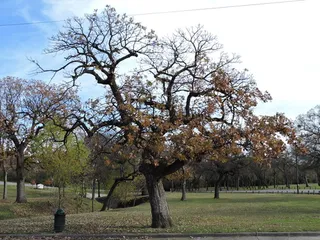 Bur Oak Quercus macrocarpaThe bulletproof Front Range shade tree. Bur oak shrugs off our alkaline clay, drought, and wind, and lives for generations. It is slow, so buy the biggest one you can and be patient.
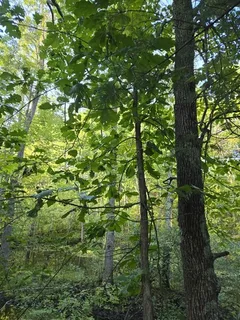 Swamp White Oak Quercus bicolorOak shade without the wait. Swamp white oak grows faster than most oaks, tolerates our clay, and colors up in fall, a strong like-for-like ash replacement for a lawn or parkway.
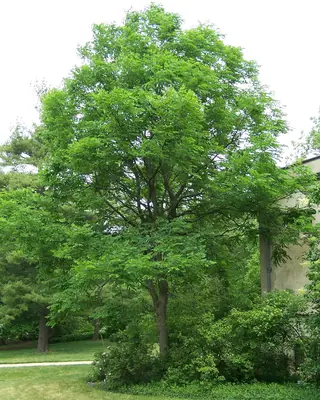 Kentucky Coffeetree Gymnocladus dioicusTough, clean, and underused. Kentucky coffeetree casts the same light, filtered shade ash were loved for, handles alkaline clay, and has no pest anywhere near EAB's league.
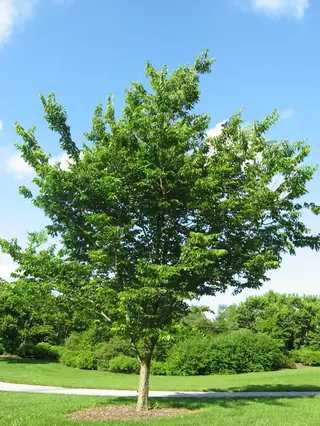 Common Hackberry Celtis occidentalisThe native survivor. Hackberry thrives on neglect in heavy clay and exposed sites where fussier trees sulk, and feeds birds in the bargain.
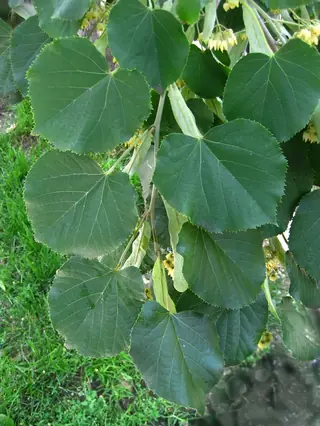 Linden Tilia americanaFast, dense, classic shade. American linden fills in quickly for a big summer canopy, with fragrant early-summer bloom that pollinators love.
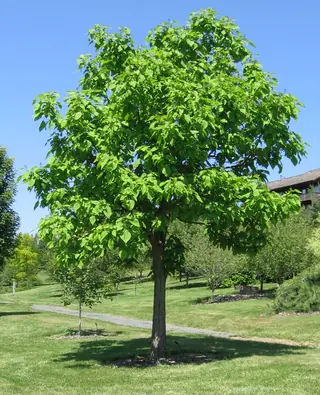 Northern/Western Catalpa Catalpa speciosaA fast, bold-leafed shade tree for a big spot. Northern catalpa is tough and quick, with showy white spring flowers, give it room.
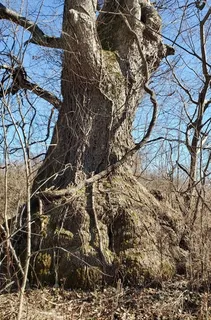 Chinkapin Oak Quercus muehlenbergiiAn oak that actually prefers our dirt. Chinkapin oak is at home in high-pH limestone clay, so it dodges the iron chlorosis that yellows pin oak here.
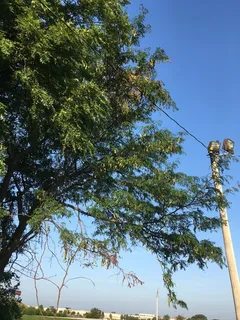 Thornless Common Honeylocust (IMPERIAL®) Gleditsia triacanthosFast filtered shade, with one caveat: honeylocust is already overplanted on the Front Range and is starting to show cankers. A fine tree, but if your block already has five, plant something else and keep the street diverse.
Browse more trees by need
Frequently asked questions
- Is it too late to treat my ash tree in Colorado?
- Maybe not. Trunk-injection treatments can protect a healthy ash and can even save one in the early stages of infestation, but a tree that has already lost more than about half its canopy is usually past saving. The honest test is the tree's condition, not the calendar, so have a certified arborist assess it.
- How much does treating an ash cost versus removing it?
- Treatment is the smaller bill each visit but it never ends: you pay a licensed applicator every year or two for the life of the tree. Removal is a larger one-time cost that climbs the bigger and more dead the tree gets. Over a decade, a big healthy ash you love can pencil out either way, which is exactly why the decision is about the tree, not just price.
- Should I just remove my ash now before EAB gets here?
- Not necessarily. A healthy ash still gives you shade today, and you can wait and treat it if the borer shows up nearby. But if the tree is already weak or badly placed, removing it on your own schedule beats removing a brittle, dead one under a deadline.
- What is the best tree to replace an ash on the Front Range?
- There is no single answer, and that is the point: plant something other than what your neighbors have. Bur and swamp white oak, Kentucky coffeetree, hackberry, and American linden are all tough, alkaline-clay tolerant, non-ash shade trees. Pick a genus your block is missing so the next pest can't take out the whole street.
- Can I move the wood from my removed ash tree?
- No. Moving ash wood and firewood is one of the main ways EAB spreads. Keep the wood on your property or use a local disposal that handles ash, and never haul it to a cabin or campsite.
Get the Front Range planting guide
A free monthly email: what to plant, what to avoid, and when, for our clay, hail, and dry winters. No spam, unsubscribe anytime.
Sources
Emerald ash borer status, treatment, and removal guidance on this page come from: