Redbud vs Serviceberry for the Colorado Front Range
Quick answer
For most Front Range yards, plant serviceberry, a tough, low-water, four-season small tree (white spring flowers, edible summer berries, fiery fall color) that thrives in our soil. Redbud's purple spring show is unbeatable, but it's borderline in our alkaline clay and sun, so save it for a protected spot and use Western seed strains.
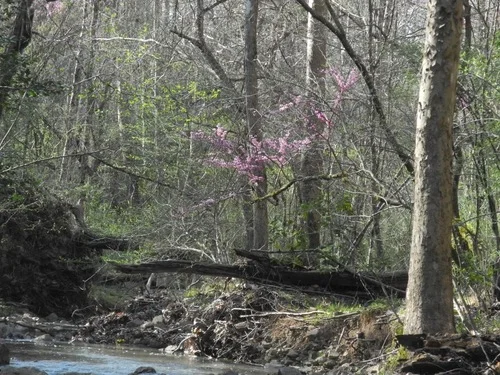
Redbud
Cercis canadensis
Eastern redbud; choose Western seed strains ('Oklahoma', var. texensis) for our soil and sun.
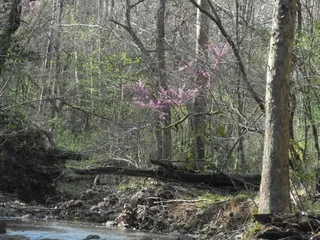
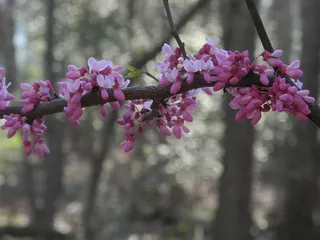
Photos: (c) Michael J. Papay, some rights reserv
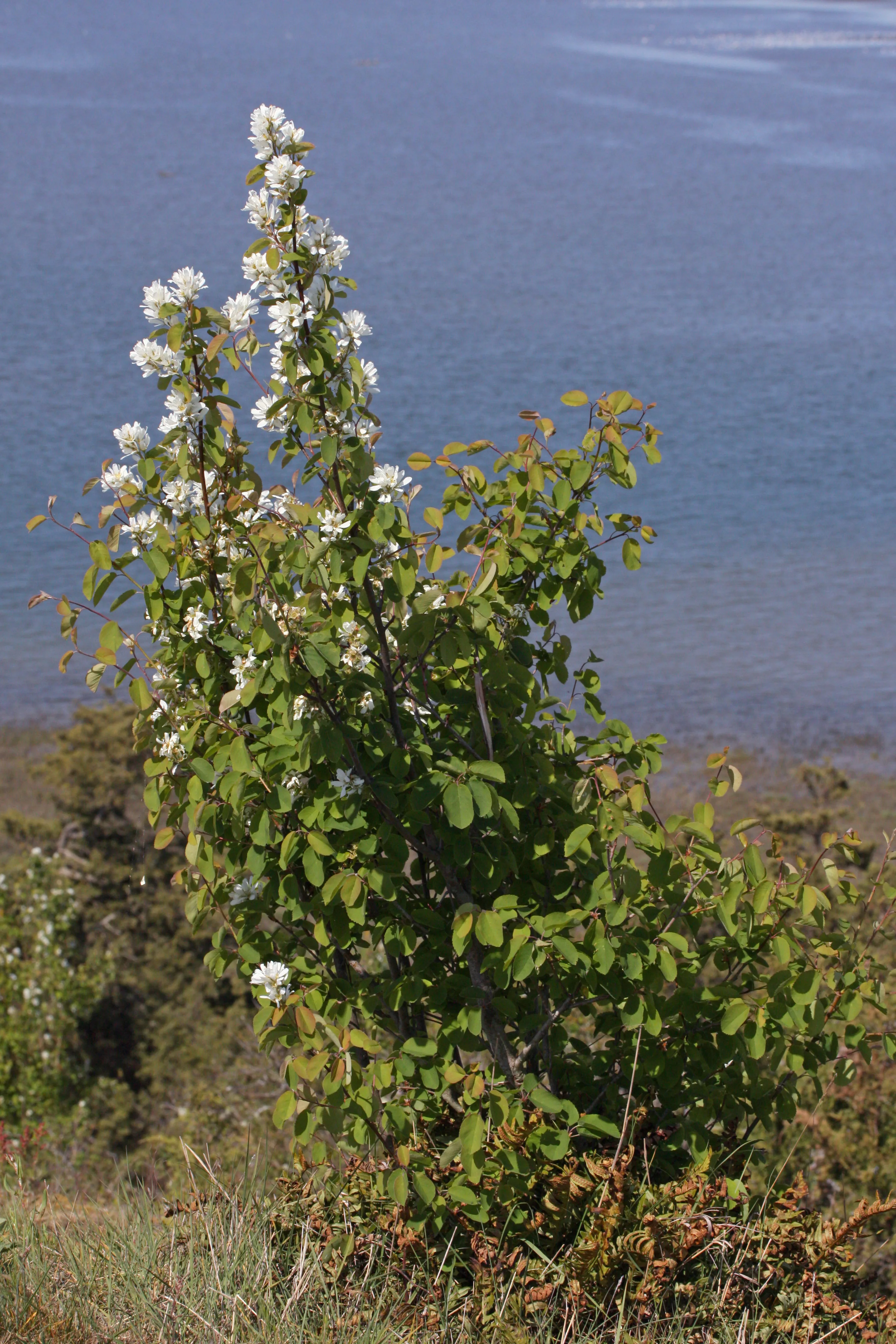
Serviceberry
Amelanchier alnifolia
Saskatoon serviceberry, usually grown as a multi-stem small tree.
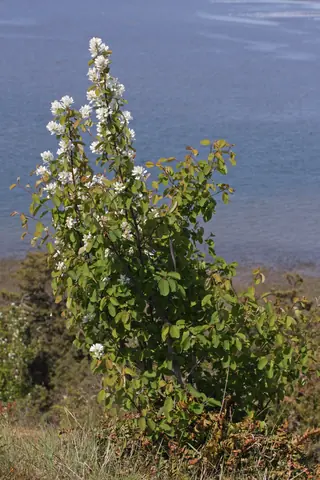
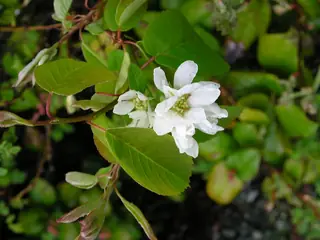
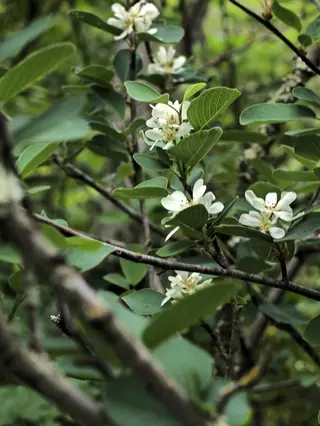
Photos: Walter Siegmund (talk) (CC BY-SA 3), brewbooks (CC BY-SA 2), John Rusk (CC BY 2)
| Redbud | Serviceberry | |
|---|---|---|
| Water need | medium water | low to medium water✓ Better here |
| Cold hardiness | USDA 4–9 | USDA 2–7✓ Better here |
| Mature size | 20–30 ft tall · 25–35 ft wide | 10–20 ft tall · 10–15 ft wide |
| Speed to shade | Slow, a long-term, legacy tree | Moderate, usable shade sooner |
| Problems to watch | Northern seed source | Large shrub; best used as multi-stem |
| Lifespan | Medium✓ Better here | Short |
| Fall color | — | Orange, Red |
| Mature form | Spreading | Rounded |
| Bothalkaline clay tolerant · wind tolerance moderate · salt tolerance moderate · hail tolerance moderate · local availability widely available · litter / cleanup minimal · pollinator value high · sun full, partial, dappled | ||
"Better here" marks the choice better suited to typical Front Range conditions, water, soil pH, cold hardiness, and wind. Growth rate and mature size are tradeoffs, not scored.
Heads-up on Redbud: Eastern redbud is borderline in our alkaline soils and intense sun, choose Western seed strains ('Oklahoma', 'Minnesota Strain', var. texensis) and plant in a protected microclimate.
Ratings from the 2024 Front Range Tree Recommendation List + CSU Extension, how we rate plants →
Where they differ
Both are small understory trees, but reliability separates them. Serviceberry is rated cleanly Recommended, is low-water and cold-hardy to zone 2, and earns its keep three seasons, white flowers, blueberry-like edible fruit, and orange-red fall. Redbud delivers a knockout spring display of rosy-purple flowers on bare branches, but Eastern redbud is borderline here: flagged for cold and prone to struggle in our alkaline soil and intense sun unless you choose Western seed strains and a sheltered microclimate.
Which should you plant?
Choose Redbud if…
- You want the most spectacular spring flower display, period
- You have a protected spot with some afternoon shade and decent soil
- You'll plant a Western seed strain ('Oklahoma', 'Minnesota Strain', var. texensis)
- You don't mind babying it a bit for that purple show
Choose Serviceberry if…
- You want a reliable, low-water small tree that thrives untended
- You'd like edible berries and strong orange-red fall color
- You're in a cold or exposed spot (hardy to USDA zone 2)
- You're fine with a multi-stem, large-shrub habit
Through the seasons
Redbud: spring pink, purple bloom.
Serviceberry: spring white bloom · orange, red fall color.
Front Range considerations
Our alkaline clay, intense high-altitude sun, and late frosts are the deciding factors. Serviceberry takes them in stride, a regional tough small tree that needs little water once established. Eastern redbud is at the edge of its range here: high pH and sun scorch it, and its early flowers can catch a late freeze, so it needs a Western seed strain and a sheltered, part-afternoon-shade microclimate to thrive. Both are great pollinator plants; deep-water through establishment and mulch well.
Plan your garden
Not sure what to plant? The finder matches Front Range trees, shrubs, perennials, and groundcover to your soil, water, sun, and zone.
Ready to plant Serviceberry?
Frequently asked questions
- Is redbud or serviceberry easier to grow on the Front Range?
- Serviceberry, by a lot. It's rated cleanly Recommended, low-water, and very cold-hardy, while Eastern redbud is borderline in our alkaline soil and sun and needs a protected spot and a Western seed strain.
- Which has better flowers?
- Redbud, its rosy-purple flowers smother the bare branches in spring and are hard to beat. Serviceberry's white spring flowers are prettier in a subtler way, and it makes up for it with fruit and fall color.
- Does serviceberry have edible berries?
- Yes, Saskatoon serviceberry produces sweet, blueberry-like fruit in early summer that's good fresh or in pies, and birds love it too.
- Which has better fall color?
- Serviceberry, it turns vivid orange-red in fall. Redbud's fall color is a modest yellow; it's grown for spring, not autumn.
- Will redbud survive Front Range winters?
- It can, but it's marginal. Use a Western seed strain ('Oklahoma', 'Minnesota Strain', or Texas redbud), plant in a sheltered microclimate, and expect occasional late-frost damage to the early flowers.
- Is serviceberry a tree or a shrub, and how big?
- Redbud reaches about 20–30 ft. Saskatoon serviceberry is really a large multi-stem shrub (10–20 ft) best trained as a small multi-stem tree, give it room to sucker or prune for a single trunk.
- Which is better for pollinators and birds?
- Both are high-value, redbud is an important early-spring nectar source, while serviceberry feeds pollinators in spring and birds with its summer berries. For overall wildlife value, serviceberry edges it.
Bottom line
For most Front Range yards, plant Serviceberry. Choose Redbud only if you want the most spectacular spring flower display, period.
Find Serviceberry near you
Related comparisons
See other low-water Front Range trees · Browse all Front Range trees