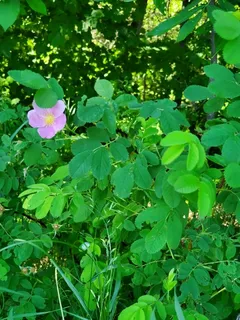
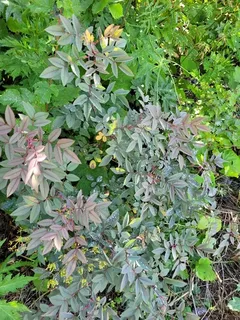
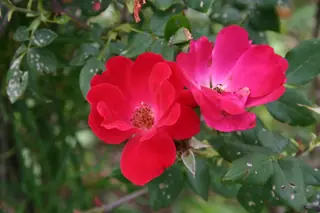
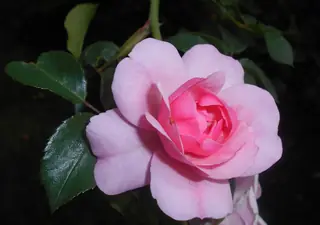
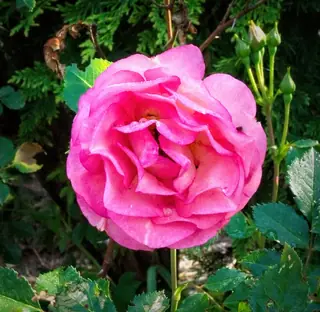
Rugosa / beach rose
Rosa rugosa
Rugosa / beach rose (Rosa rugosa) is a shrub suited to the Colorado Front Range. It matures to about 4 to 6 ft tall and 4 to 8 ft wide, needs low to medium water, and prefers full sun. Tough as nails; fragrant blooms repeat all season; large hips. Spreads, give it room.
On the CSU listlow to medium water4 to 6 ft tall and 4 to 8 ft wideXeric / water-wise
Photos
- Photo 1: (c) AnimalObserverDeniz321, some rights reserved (CC BY)
- Photo 2: (c) Tom Norton, some rights reserved (CC BY), uploaded by Tom Norton
- Photo 3: (c) S. Rae, some rights reserved (CC BY)
At a glance
Will it survive here?
- Hardiness zones
- USDA 3 to 9
- Water needs
- low to medium water
- Sun
- Best in full sun.
- Soil
- clay, loam, sandy
- Soil pH
- 5.5 to 8.0
- Hail tolerance
- high
- Wind tolerance
- high
- Salt tolerance
- high
How big, what shape?
- Mature size
- 4 to 6 ft tall and 4 to 8 ft wide
- Planting spacing
- ~8 ft apart (6 ft for a hedge/screen)
- Growth rate
- Moderate
What it looks like, and when
- Bloom time
- late spring, early summer, mid summer
- Bloom color
- pink, white
- Bloom length
- Reblooms
- Fall color
- Yellow, orange
- Foliage
- Deciduous
Who else benefits
- Pollinator value
- high
- Deer
- Deer often browse this
- Colorado native
- No
Also worth knowing
- Fire rating
- Not rated
Things to know before you plant
- SuckersIt suckers from the base or roots, so remove shoots to keep it in bounds.
- ThornyIt is thorny, so site it away from paths, seating, and play areas.
- Messy dropIt drops messy fruit, pods, or litter, so keep it off patios, walks, and pool decks.
Common problems on the Front Range
- Aphids
- Powdery mildew and blackspot
- Japanese beetle
These are general tendencies for this group of plants on the Front Range, not a diagnosis. Many are stress-driven and preventable with good siting and watering. For a specific plant or an active problem, consult a certified arborist or your local CSU Extension office.
Planting & establishment
Water deeply 1×/week first summer to establish. After establishment, water 1 to 2×/month during dry stretches.
- Fruit: ornamental.
Frequently asked questions
- Is Rugosa / beach rose good for the Colorado Front Range?
- Yes, Rugosa / beach rose is a well-suited shrub for Colorado's Front Range.
- What should I know before planting Rugosa / beach rose?
- The main things to know: It suckers from the base or roots, so remove shoots to keep it in bounds. It is thorny, so site it away from paths, seating, and play areas. It drops messy fruit, pods, or litter, so keep it off patios, walks, and pool decks.
- How big does Rugosa / beach rose get?
- It matures to about 4 to 6 ft tall and 4 to 8 ft wide.
- How far apart do I plant Rugosa / beach rose?
- Space Rugosa / beach rose about 8 ft apart for a full, natural form, or about 6 ft apart for a faster hedge or screen.
- Is Rugosa / beach rose hardy on the Front Range?
- Rugosa / beach rose is hardy in USDA 3 to 9. The Colorado Front Range spans roughly USDA 4b to 6a, so it is well within range.
- How much water does Rugosa / beach rose need?
- It needs low to medium water once established.
- How fast does Rugosa / beach rose grow?
- Rugosa / beach rose is a moderate-growing shrub. Growth rate depends on water and site conditions on the Front Range.
- What color does Rugosa / beach rose turn in fall?
- Rugosa / beach rose turns yellow and orange in autumn. Fall color intensity varies with the season and site on the Front Range.
- Is Rugosa / beach rose native to Colorado?
- No. It is not a Colorado native, but it grows well on the Front Range.
- Is Rugosa / beach rose deer-resistant?
- No. Deer often browse Rugosa / beach rose, so plan on protecting it where deer roam.
- Is Rugosa / beach rose prone to pests or disease on the Front Range?
- Rugosa / beach rose can be affected by aphids and other issues common to this group on the Front Range. These are general tendencies, not a diagnosis, many are stress-driven and preventable with good siting and watering. For a specific plant or an active problem, consult a certified arborist or CSU Extension.
- How long does Rugosa / beach rose bloom?
- Rugosa / beach rose reblooms through the season, especially if you deadhead spent flowers on the Front Range. Bloom timing shifts a week or two with elevation and spring weather.